Brazilian etiquette: greetings, gestures and cultural tips for travelers
How to greet people in Brazil, how many kisses to give, which gestures to avoid, beach and dress codes, time, invitations and small talk. Practical cultural tips and the Portuguese that will make Brazilians smile.
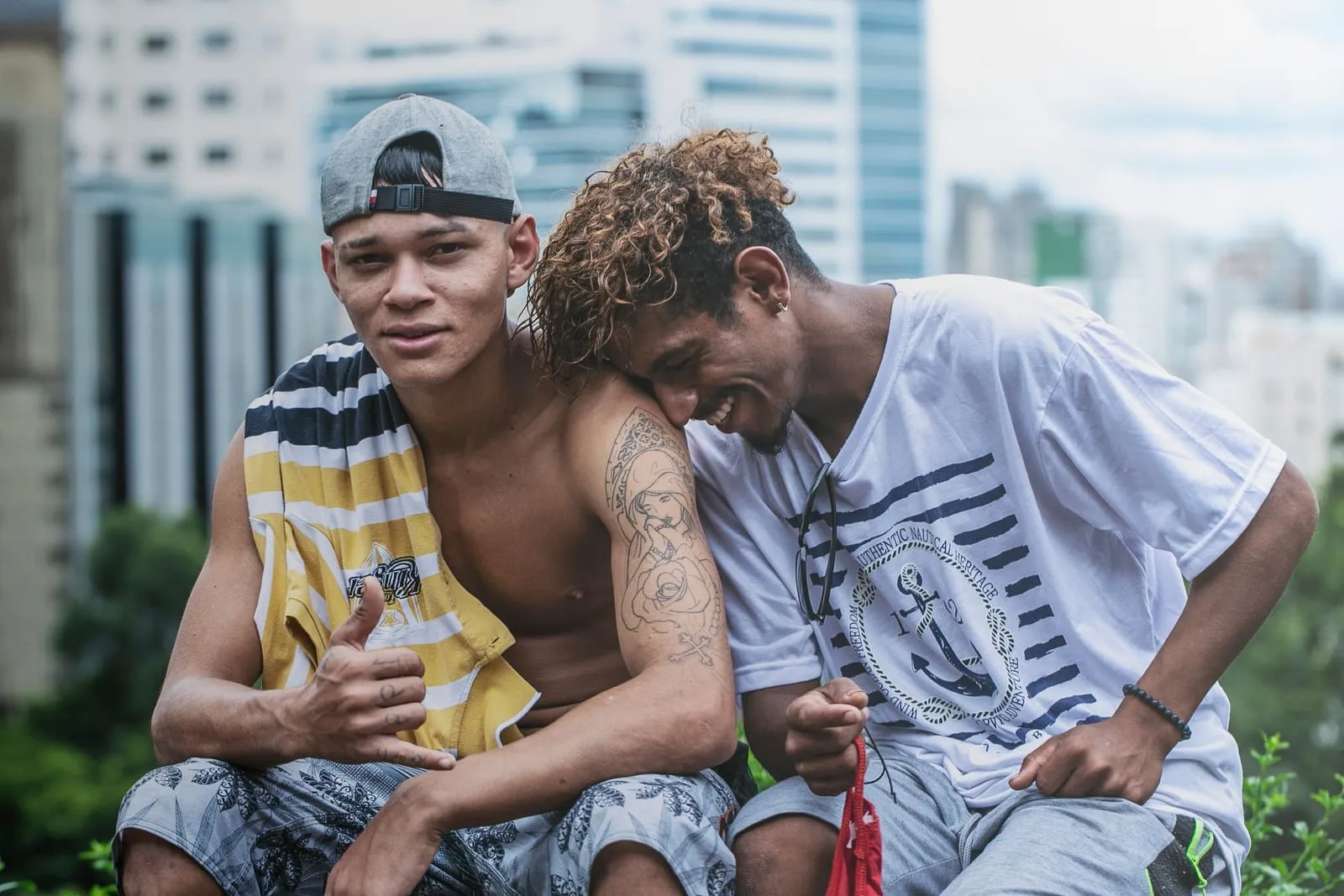
Brazilians are famously warm, friendly and welcoming. You don’t need to know every cultural rule: a smile, a few words of Portuguese and some curiosity will open most doors. But a few tips will help you fit in and avoid awkward moments.
Greetings
- Between friends and when meeting women, Brazilians usually greet with a hug or a kiss on the cheek (beijinho). It’s more of a cheek touch with a kiss sound than a real kiss.
- How many kisses? It depends on the region: usually one in São Paulo, two in Rio, and sometimes three in other places. Follow the other person’s lead.
- Men usually shake hands with other men, often with a pat on the back or a half hug between friends.
- In business or formal situations, a handshake is the safe choice.
- When you arrive at a party or a group, greet everyone, one by one. And say goodbye to everyone when you leave, which can take a while!
Speak Portuguese, not Spanish
Brazilians speak Portuguese, not Spanish. Many understand some Spanish, but assuming Brazil is a Spanish-speaking country can come across as a bit careless. Even a few words of Portuguese are hugely appreciated: “Oi, tudo bem?”, “obrigado”, “por favor”. Brazilians will be delighted and patient with you.
Personal space and conversation
- Brazilians stand closer and touch more when they talk: a hand on your arm or shoulder is friendly, not invasive.
- Conversations are lively, with lots of interruptions. It’s a sign of interest, not rudeness.
- Good topics: food, music, football, beaches, travel in Brazil, family. Asking for local recommendations always works.
- Careful topics: politics, religion and social issues can be sensitive. Listen more than you speak. Avoid comparing Brazil negatively with your country.
- Football: it’s fine to ask which team someone supports (“pra que time você torce?”), but be ready for passion!
Gestures
- Thumbs up (joinha) is everywhere: it means OK, thanks, yes, all good.
- Avoid the “OK” sign (thumb and index finger in a circle). In Brazil, it can be an offensive gesture.
- The figa (thumb between two fingers in a fist) is a good-luck charm.
- Pulling down the skin under your eye means “olho vivo”: be careful, watch out.
- Shaking your hand loosely and snapping your fingers means “a long time ago” or “wow, a lot”.
Time
Brazilian time is relaxed for social events: arriving 30 minutes to an hour late to a party at someone’s home is normal. For restaurant reservations, tours, flights and business meetings, be on time.
Watch out for expressions of time: “já já” (any minute now), “daqui a pouco” (in a little while) and “vou ver” (I’ll see) can be very flexible!
Invitations
Brazilians often say “aparece lá em casa!” (come over sometime!). It’s a friendly expression, not always a real invitation. If you’re invited for a specific day and time, it’s real. Bring something: a dessert, drinks or flowers. At a churrasco (barbecue), offering to bring beer or meat is common.
At the beach
- Small swimwear is normal for all body types. Men wear sungas (swim briefs) or shorts. Nobody cares what you look like.
- Topless sunbathing is not common and can cause problems on most beaches.
- Don’t walk around town in swimwear, except in beach towns, and cover up in restaurants away from the beach.
- Use a canga, a light sarong, instead of a towel. That’s what locals do.
- Flip-flops (chinelos, like Havaianas) are worn everywhere, but not in nice restaurants or on hikes.
Dress code
Brazilians in cities dress casual but neat. Shorts and flip-flops are fine in beach towns, but people dress up more in São Paulo, in nice restaurants and at night. In churches, cover your shoulders and knees.
Lines and priority
Brazil takes priority seating and lines (preferencial) seriously: seniors, pregnant women, people with disabilities and people with small children go first at banks, supermarkets and on public transport. Don’t use the preferencial line or seat if it isn’t for you.
Little things that matter
- Say “bom dia”, “boa tarde” or “boa noite” when you walk into a shop, a taxi or an elevator.
- Say “com licença” to get past people, and “obrigado” (if you’re a man) or “obrigada” (if you’re a woman).
- At the table, wait for everyone to be served, and say “bom apetite”.
- Napkins: many Brazilians eat sandwiches, pizza and snacks with a napkin, not with bare hands.
- The “jeitinho brasileiro” is the creative Brazilian way of finding a solution to any problem. Patience and a smile usually work better than complaining.
Tips
- Learn ten phrases. It changes everything. Start with the ones on this page.
- Accept the cafezinho. A small coffee is offered as hospitality in homes, shops and offices.
- Be ready for hugs. Brazilians are affectionate, even with people they just met.
Useful phrases
- 01
Oi, tudo bem?
Hi, how are you?
- 02
Tudo bem, e você?
Good, and you?
The standard answer. People say it even when things aren't great!
- 03
Prazer!
Nice to meet you!
- 04
Com licença.
Excuse me.
To get past someone or to interrupt politely.
- 05
Desculpa!
Sorry!
- 06
Valeu!
Thanks! / Cheers!
Very informal "thank you". You'll hear it all day long.
- 07
Imagina!
Don't mention it!
- 08
Fica à vontade.
Make yourself at home.
- 09
Saúde!
Cheers! / Bless you!
Used for a toast and after someone sneezes.
- 10
Falo só um pouquinho de português.
I only speak a little Portuguese.
Audio made with Ed's AI voice. Want to hear the real Ed? Book a lesson