Moqueca baiana
Fish or shrimp stewed in a clay pot with dendê (palm) oil, coconut milk, peppers and coriander. Served bubbling hot with rice and farofa.
"Uma moqueca de camarão para duas pessoas."A shrimp moqueca for two people.
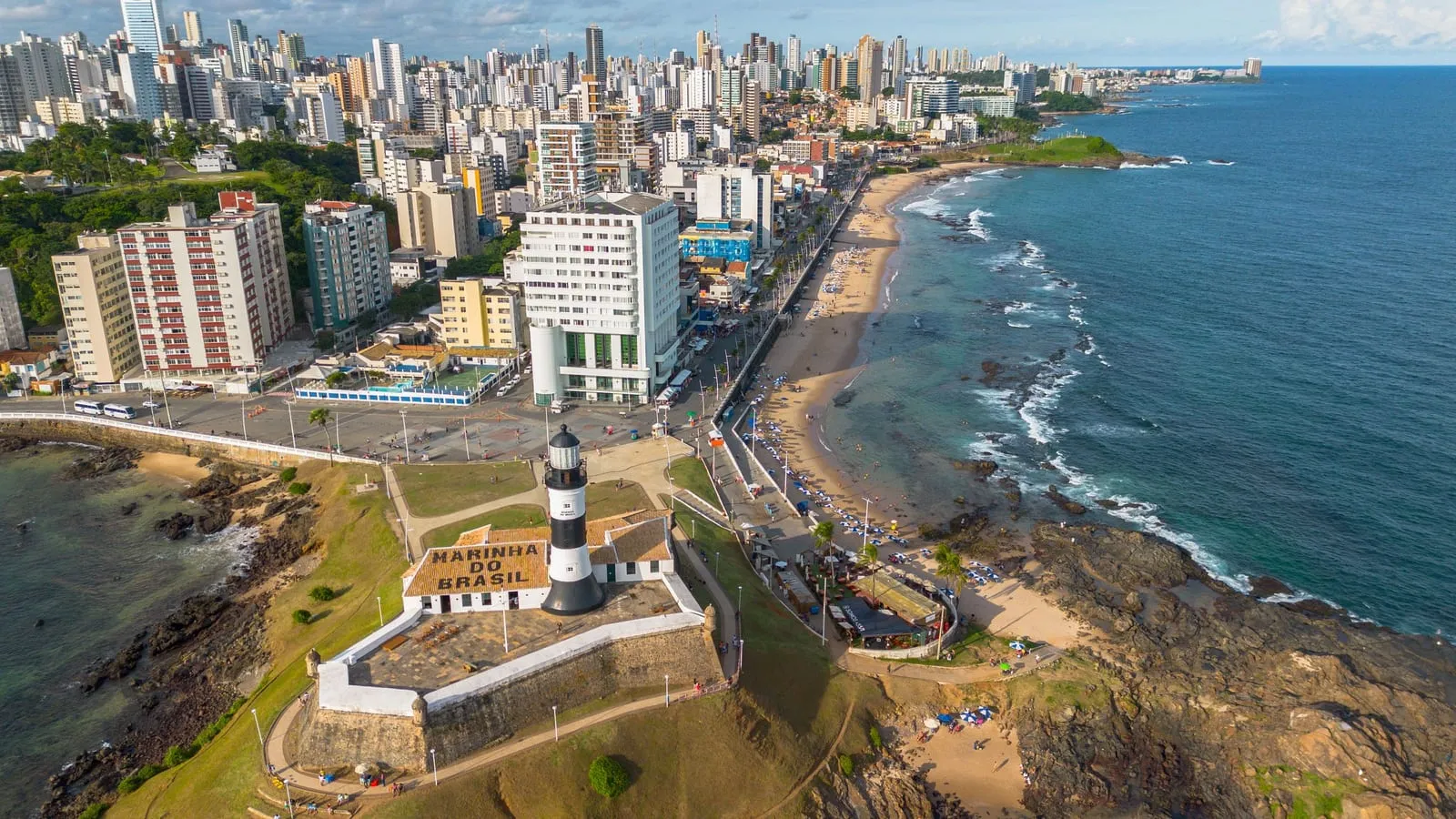
Colorful colonial streets, Afro-Brazilian culture and drums in the air, plus the Bahian Portuguese to join in.
Salvador was Brazil’s first capital and is the heart of Afro-Brazilian culture. You feel it everywhere: in the drums of the Pelourinho, the capoeira circles, the food cooked with dendê oil and the warmth of the people, called soteropolitanos (or simply baianos).
For a Portuguese learner, Salvador is a treat. Bahians speak a little more slowly than people in Rio or São Paulo, and they have a rich set of expressions like “oxe”, “massa” and “painho”. Learn the phrases below and you’ll be ready for the street food stalls, the churches and the beach.
A practical tip: in the historic center, stick to the busy, well-lit streets, especially at night, and keep your valuables out of sight.
Updated November 2026 · by Ed
The Portuguese you'll actually use here. Tap to hear how it sounds, then say it out loud.
Start every question with "Com licença…" (excuse me) and end with "obrigado" (if you're a man) or "obrigada" (if you're a woman).
Me vê um acarajé, por favor.
One acarajé, please.
The vendor will probably ask "quente ou frio?" Quente (hot) means with spicy pepper sauce, frio (cold) means without.
Sem pimenta, por favor.
No pepper, please.
Onde fica o Elevador Lacerda?
Where is the Lacerda Elevator?
Quanto custa a fitinha do Bonfim?
How much is the Bonfim ribbon?
Qual praia você recomenda?
Which beach do you recommend?
Tá muito quente hoje!
It's really hot today!
"Tá" is the everyday spoken form of "está".
Oxe!
Huh? / What?! / Wow!
The most Bahian word there is. Used for surprise, confusion or disbelief, and you'll hear it all the time.
Massa!
Cool! / Awesome!
Que horas começa o show?
What time does the show start?
Audio made with Ed's AI voice. Want to hear the real Ed? Book a lesson
Two days for the Pelourinho, Bonfim and Barra. Stay longer to enjoy the city beaches or take a day trip to Praia do Forte or Morro de São Paulo.
Ride-hailing apps are cheap and practical in the city. A car only makes sense to explore the coast north of Salvador.
There are plenty of Airbnb options, especially in Barra and Rio Vermelho. In the historic center, pick well-reviewed places on busy streets.
With a useful phrase for each one.

Salvador's historic center is a UNESCO World Heritage Site, with pastel-colored colonial houses, cobblestone squares and baroque churches. Don't miss the São Francisco Church, with an interior covered in gold.
"Essa igreja está aberta para visitação?"
Is this church open to visitors?

Salvador is built on two levels. The Art Deco Elevador Lacerda connects the upper city (Cidade Alta) to the lower city (Cidade Baixa) in seconds, with a great view of the bay. Right below is the Mercado Modelo, full of crafts.
"Quanto custa para subir?"
How much does it cost to go up?

The Igreja do Senhor do Bonfim is one of the most important churches in Bahia. Visitors tie colorful "fitinhas" to the gate. Tradition says you tie three knots, make three wishes, and wait for the ribbon to fall off on its own.
"Eu fiz três pedidos!"
I made three wishes!

The old lighthouse at Barra is the classic place to watch the sun go down over the Bay of All Saints. Arrive early, grab a coconut and find a spot on the rocks or the beach.
"Onde é o melhor lugar para ver o pôr do sol?"
Where's the best place to watch the sunset?

Acarajé is Salvador's signature street food, a black-eyed pea fritter fried in dendê (palm) oil and filled with shrimp and sauces, usually sold by "baianas" in white dresses. In the Pelourinho you'll often see capoeira circles with live music.
"Posso fazer uma aula de capoeira?"
Can I take a capoeira class?

Right next to the Pelourinho but calmer and more residential, this charming hilltop neighborhood is lined with pastel townhouses, art galleries, cozy cafés and sunset bars overlooking All Saints Bay.
"Qual bar de Santo Antônio tem vista para a baía?"
Which bar in Santo Antônio has a view of the bay?

Salvador's bohemian neighborhood comes alive after dark with music bars, breezy squares and the city's most famous acarajé stalls (Dinha and Cira) right beside the little house dedicated to sea goddess Iemanjá.
"Onde fica o tabuleiro da Dinha no Rio Vermelho?"
Where is Dinha's acarajé stand in Rio Vermelho?

A 16th-century waterfront sugar-mill complex housing contemporary Brazilian art, a sculpture garden, a tiny local beach and beloved Saturday sunset jazz sessions by the water.
"Tem jazz no MAM neste sábado?"
Is there jazz at MAM this Saturday?

Sail out from the Terminal Náutico on a schooner across Brazil's largest bay to Ilha dos Frades (clear emerald water and a hilltop chapel) and historic Itaparica Island.
"O passeio de escuna para a Ilha dos Frades sai que horas?"
What time does the schooner tour to Ilha dos Frades leave?
The local dishes worth trying, and how to order them.
Fish or shrimp stewed in a clay pot with dendê (palm) oil, coconut milk, peppers and coriander. Served bubbling hot with rice and farofa.
"Uma moqueca de camarão para duas pessoas."A shrimp moqueca for two people.

Acarajé's cousin: the same black-eyed pea dough, but wrapped in banana leaf and steamed instead of fried.
"Qual é a diferença entre abará e acarajé?"What's the difference between abará and acarajé?

A creamy shrimp dish made with cassava purée, coconut milk and dendê. Rich, comforting and very Bahian.
"O bobó é muito apimentado?"Is the bobó very spicy?

A sweet made of coconut and sugar, sold by street vendors in many flavors. A perfect snack while you walk.
"Quanto é a cocada?"How much is the cocada?

Rich, velvety shrimp-bread-peanut-and-dendê cream (vatapá) and spiced okra stew (caruru) — served alongside acarajé, moqueca or as a festive Bahian plate of their own.
"Esse prato acompanha vatapá e caruru?"Does this dish come with vatapá and caruru?

Try "cravinho" — cachaça infused with cloves, honey and lime at O Cravinho bar in the Pelourinho — or a refreshing caipirinha made with tangy Bahian umbu or cajá fruit.
"Me vê uma dose de cravinho para experimentar."I'll have a shot of cravinho to try.

Tip: in Brazil a pousada is a small guesthouse, often family-run, with breakfast included.
Landing at the airport? Book a private airport transfer with an English-speaking driver waiting for you.
Stay connected from the moment you land: Get a Brazil eSIM (data plan you install before the trip). How it works
Affiliate links: Ed may earn a small commission at no extra cost to you.

Everything you need for a smooth arrival in Brazil — private airport transfers in Rio, São Paulo, Salvador and Floripa, booking domestic flights, travel eSIMs and useful Portuguese phrases.
Read guide
Pelourinho, Santo Antônio Além do Carmo, Barra or Rio Vermelho? A local guide to the safest, most atmospheric areas to stay in Salvador, Bahia, with hotel links and Portuguese phrases.
Read guide
How Carnival in Brazil really works: Rio Sambadrome vs. street blocos, Salvador's trios elétricos, Olinda's frevo, when to book hotels, safety tips and essential Portuguese Carnival phrases.
Read guide
How Brazilians celebrate New Year's Eve (Réveillon): Copacabana fireworks, wearing white, jumping seven waves, top beach towns to ring in the new year, booking tips and Portuguese phrases.
Read guide
Discover Festa Junina (São João), Brazil's huge June celebration of forró music, bonfires, quadrilha dancing and corn-based comfort food — best cities (Campina Grande, Caruaru, São Luís) and Portuguese phrases.
Read guide
When to visit Brazil for its biggest festivals and cultural events: Carnival, Holy Week in Ouro Preto, São Paulo Pride, Festa Junina, Parintins, Círio de Nazaré, Oktoberfest, Natal Luz and Réveillon.
Read guide
The classic 14-day Brazil itinerary for first-timers. Rio de Janeiro, the car-free island of Ilha Grande, Iguaçu Falls from both sides and Afro-Brazilian Salvador, day by day, with flights, costs and phrases.
Read guide
A 10-day Bahia itinerary with Afro-Brazilian Salvador, the canyons, caves and waterfalls of Chapada Diamantina and the car-free island beaches of Morro de São Paulo. Day by day, with transport, costs and Bahian phrases.
Read guideFly into SSA. Salvador's international airport (SSA) is about 2 h by plane from Rio or São Paulo. The airport is around 30 km from the historic center.
Sep–Mar. Sunnier and drier. April to July is the rainy season. Carnival brings huge crowds and much higher prices.
Around R$ 300–600 / day. Rough mid-range estimate per person (pousada or hotel, meals and local transport). Prices rise a lot around Carnival.
3–4 days. Two days for the Pelourinho, Bonfim and Barra. Stay longer to enjoy the city beaches or take a day trip to Praia do Forte or Morro de São Paulo.
Not needed. Ride-hailing apps are cheap and practical in the city. A car only makes sense to explore the coast north of Salvador.
Barra: The most popular base: beaches, the lighthouse, restaurants and a walkable seafront. Pelourinho & Santo Antônio: Colonial charm and boutique pousadas steps from the sights. Santo Antônio Além do Carmo is calmer and very charming. Rio Vermelho: The bohemian neighborhood, full of bars, live music and some of the best acarajé in town.
There are plenty of Airbnb options, especially in Barra and Rio Vermelho. In the historic center, pick well-reviewed places on busy streets.
Some people in hotels and tourist businesses speak English, but most locals speak only Portuguese. Learning a few phrases, like the ones in this guide, makes your trip much easier and Brazilians really appreciate the effort.
Everything on this site is free, and it'll stay that way. If you'd like extra help, here's what Ed offers:

Beaches, mountains and samba in the "Marvelous City", plus the carioca Portuguese to enjoy it like a local.

An island of beaches, lagoons, trails and fresh oysters, plus the Portuguese you'll need from the bus stop to the surf shop.

Sea turtles, natural pools, a 16th-century castle and a charming village, just an hour from Salvador, plus the Portuguese you'll need there.
20 essential phrases and a simple 7-day plan to start speaking real Brazilian Portuguese.