Eating out in Brazil: por quilo, PF, rodízio and how to order
How eating out works in Brazil. Meal times, por quilo buffets, prato feito, churrascarias, padarias, botecos and street food, what to try in each region, and the Portuguese you need to order like a local.
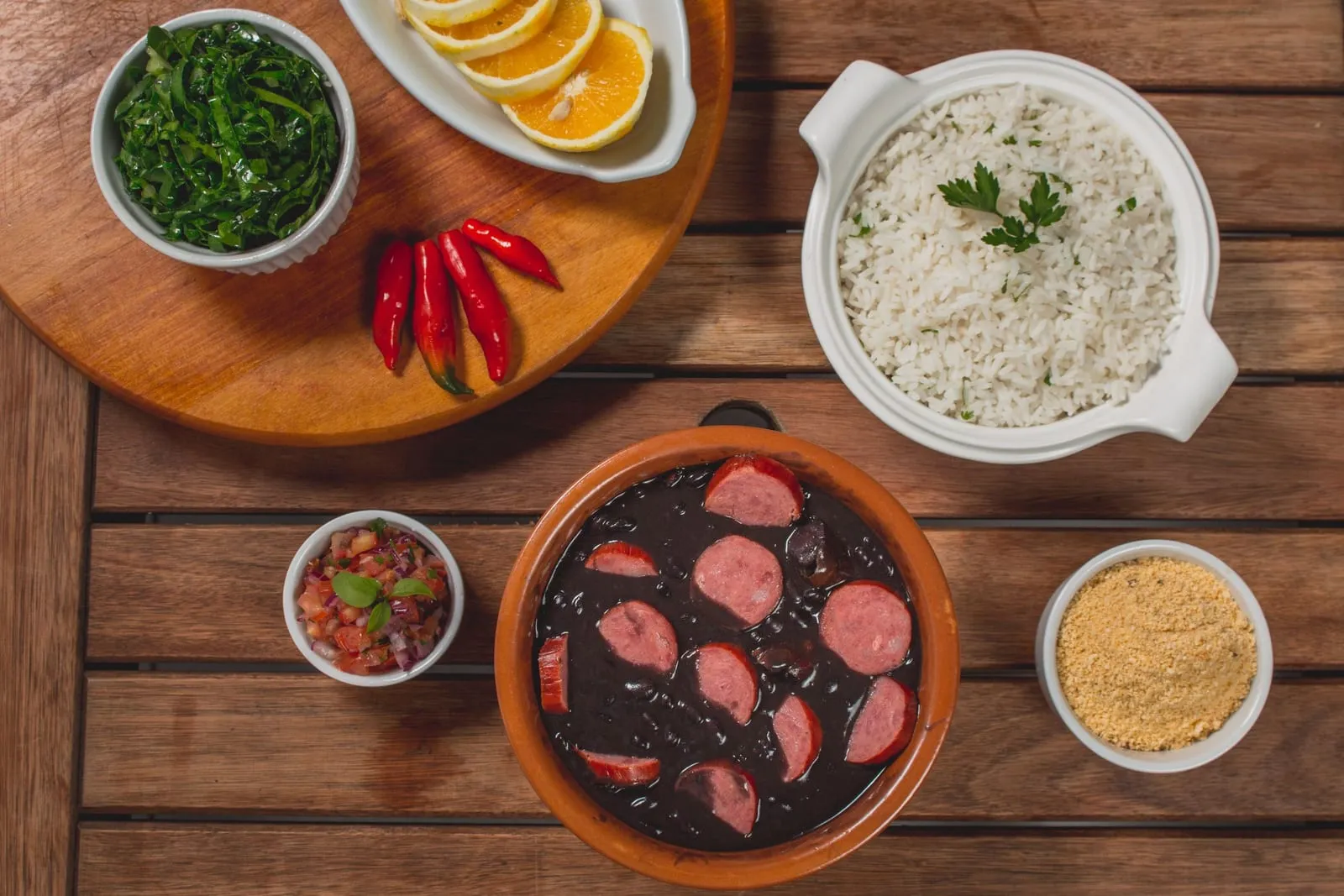
Food is one of the best parts of traveling in Brazil. It’s generous, fresh, and very different from region to region. Knowing how eating out works will help you eat well, spend less, and order with confidence in Portuguese.
Meal times
- Café da manhã (breakfast): usually included at hotels and pousadas. On the street, people grab a coffee and a pão na chapa at a padaria.
- Almoço (lunch): the main meal of the day, from about 12:00 to 14:00. This is when you get the best value.
- Jantar (dinner): from about 19:30, and much later on weekends. In big cities, restaurants are full at 21:00 or 22:00.
- Lanche (snack): a lanche in the afternoon, often a pastel, coxinha or pão de queijo.
Where to eat
Por quilo (pay by weight)
A Brazilian invention and a traveler’s best friend. You serve yourself from a big buffet of salads, rice, beans, meats, fish and vegetables, then weigh your plate at the scale and pay by the kilo. You can try a little of everything, and you only pay for what you take. Look for signs saying “comida a quilo” or “self-service”. Mostly open at lunchtime.
Prato feito (PF) and prato executivo
The everyday Brazilian lunch: a plate with rice, beans, a meat (chicken, beef, pork or fish), salad and fries or farofa, for a fixed price. Cheap, filling and found in every neighborhood. A prato executivo is a slightly fancier version, sometimes with a drink or dessert.
Churrascaria and rodízio
At a churrascaria rodízio, waiters walk around with skewers of grilled meat and slice them right onto your plate, for a fixed price. You get a card that’s green on one side (“bring more”) and red on the other (“stop for now”). The star is picanha (top sirloin cap). There’s also a huge buffet. Pace yourself!
Rodízio also exists for pizza, sushi and pasta: all-you-can-eat at a fixed price.
Padarias (bakeries)
Brazilian padarias are much more than bakeries: they serve coffee, breakfast, sandwiches, snacks, juices and sometimes lunch. Great for a quick, cheap meal. Order a pão na chapa (grilled buttered bread), a misto quente (ham and cheese toastie) and a pingado or média (coffee with milk).
Botecos (bars)
The boteco is the heart of Brazilian social life: a simple bar with plastic tables on the sidewalk, ice-cold beer and petiscos (bar snacks) to share, like bolinho de bacalhau (salt cod fritters), pastel, coxinha, torresmo and mandioca frita. Beer often comes in big 600 ml bottles shared between friends in small glasses.
Lanchonetes and street food
Lanchonetes are snack bars with juices, sandwiches and savory pastries (salgados). Street food is everywhere: pastel at street markets, acarajé in Bahia, tapioca in the Northeast, churrasquinho (meat skewers) and milho (corn on the cob) at the beach and in parks.
What to try by region
| Region | Must-try |
|---|---|
| Rio de Janeiro | Feijoada (on Saturdays), biscoito Globo, mate on the beach, chope |
| São Paulo | Pastel at the market, sanduíche de mortadela at the Mercadão, pizza, Japanese food |
| Minas Gerais | Pão de queijo, tutu de feijão, feijão tropeiro, frango com quiabo, doce de leite, cheese |
| Bahia | Moqueca baiana, acarajé, vatapá, bobó de camarão, cocada |
| Northeast | Tapioca, carne de sol, baião de dois, cuscuz, crab (caranguejo) on the beach |
| Amazon and Pará | Tacacá, pato no tucupi, açaí (with fish, not sweet!), river fish like tambaqui and pirarucu |
| South | Churrasco (barbecue), chimarrão (mate), café colonial in Gramado, seafood in Florianópolis |
| Everywhere | Brigadeiro, açaí na tigela, fresh fruit juices, guaraná soda |
Drinks
- Sucos naturais: fresh juices of fruits you may never have heard of: cajá, cupuaçu, acerola, graviola, caju. Ask “sem açúcar” (no sugar) or “com pouco açúcar” (a little sugar): they’re often very sweet.
- Água de coco: coconut water, straight from the coconut.
- Caipirinha: cachaça, lime, sugar and ice. Variations are made with vodka (caipiroska) or other fruits.
- Chope: draft beer, served very cold with a thick head.
- Cafezinho: a small, strong, often sweet coffee, offered everywhere as a gesture of hospitality.
- Guaraná: Brazil’s favorite soda, made from an Amazon fruit.
Vegetarians and allergies
Brazilian food is very meat-heavy, but vegetarians do fine: por quilo buffets always have lots of salads, vegetables, rice and beans, and big cities have many vegetarian and vegan restaurants. Be careful: beans and some vegetables can be cooked with bacon or meat. Ask “tem carne?” (does it have meat?). For allergies, learn the words: camarão (shrimp), amendoim (peanut), glúten, lactose, castanha (nuts).
Tips
- Portions are big. Many dishes serve two. Ask “serve quantas pessoas?”
- Ask for the bill: it won’t come automatically. Check for the 10% service charge. See tipping in Brazil.
- Tap water: drink filtered or bottled water. See health in Brazil.
- Lunch is cheaper than dinner. Make lunch your main meal and save money.
- Saturday is feijoada day in Rio and many other cities, often with live samba.
Useful phrases
- 01
Uma mesa para dois, por favor.
A table for two, please.
- 02
Pode me trazer o cardápio?
Can you bring me the menu?
- 03
O que você recomenda?
What do you recommend?
- 04
Serve quantas pessoas?
How many people does it serve?
Very useful! Many Brazilian dishes are made to share between two or more people.
- 05
Eu sou vegetariano.
I'm vegetarian.
A woman says "vegetariana". For vegan, say "vegano" or "vegana".
- 06
Tem alguma opção sem glúten?
Is there any gluten-free option?
- 07
Sou alérgico a camarão.
I'm allergic to shrimp.
A woman says "alérgica".
- 08
Sem gelo, por favor.
No ice, please.
- 09
Ao ponto / mal passado / bem passado
Medium / rare / well done
- 10
Mais um chope, por favor!
One more draft beer, please!
- 11
Estava uma delícia!
It was delicious!
Audio made with Ed's AI voice. Want to hear the real Ed? Book a lesson