10 days in Bahia: Salvador, Chapada Diamantina and Morro de São Paulo
A 10-day Bahia itinerary with Afro-Brazilian Salvador, the canyons, caves and waterfalls of Chapada Diamantina and the car-free island beaches of Morro de São Paulo. Day by day, with transport, costs and Bahian phrases.
Bahia is a world of its own. In ten days you can combine Salvador’s music, food and history, the wild canyons, caves and waterfalls of Chapada Diamantina, and the easy beach life of Morro de São Paulo, an island where wheelbarrows replace cars. It’s my favorite way to see that Brazil is much more than Rio.
The route at a glance
| Day | Where | Highlights |
|---|---|---|
| 1 | Salvador | Barra, sunset at the lighthouse |
| 2 | Salvador | Pelourinho, São Francisco church, Olodum |
| 3 | Salvador → Lençóis | Bus or flight to Chapada Diamantina |
| 4 | Chapada Diamantina | Poço do Diabo, Morro do Pai Inácio at sunset |
| 5 | Chapada Diamantina | Poço Azul, Poço Encantado, Lapa Doce cave |
| 6 | Chapada Diamantina | Fumaça waterfall hike |
| 7 | Lençóis → Salvador | Ribeirão do Meio in the morning, back to Salvador |
| 8 | Salvador → Morro de São Paulo | Catamaran across the bay |
| 9 | Morro de São Paulo | Boat trip around the island, Boipeba |
| 10 | Morro → Salvador | Beach morning, back to Salvador to fly home |
Best for: nature lovers, hikers, music and food lovers, second trips to Brazil.
Pace: active in the middle, relaxed at the end.
Best season: September to March is driest on the coast. In Chapada Diamantina, the rainy season (roughly November–March) means fuller waterfalls but some muddy trails; April–September is great for the blue light in the caves.
Days 1–2: Salvador
- Day 1: Arrive, check in in Barra or Rio Vermelho, swim at Porto da Barra and watch the sun set over the bay from the Farol da Barra lighthouse.
- Day 2: The Pelourinho: the golden Igreja de São Francisco, the Afro-Brazilian Museum, the Elevador Lacerda and the Mercado Modelo. Eat a moqueca baiana for lunch and an acarajé in the evening. If it’s a Tuesday, stay in the Pelourinho for live music and the Olodum drums.
You’ll come back to Salvador at the end, so leave the Bonfim church and Rio Vermelho for later. See the Salvador guide.
Day 3: Salvador to Chapada Diamantina
Lençóis, the main base for Chapada Diamantina, is a small diamond-rush town about 400 km west of Salvador.
- By bus: about 6–7 hours from Salvador’s bus station. There’s usually a night bus, which saves a day of daylight but is tiring.
- By plane: Lençóis has a small airport with a few weekly flights from Salvador or São Paulo, depending on the season.
- By car: possible, but the drive is long. Inside the Chapada, a car is useful; otherwise, local agencies run tours with transport included.
Evening. Lençóis has cobbled streets, colorful houses and lots of small restaurants. Book your tours for the next days at one of the local agencies.
About guides: many of Chapada Diamantina’s trails require (or strongly recommend) a local guide. They know the trails, the weather and the river levels, and the money stays in the community. Ask: “Precisa de guia para essa trilha?”
Day 4: Poço do Diabo and Morro do Pai Inácio
The classic first tour.
- Morning: walk to the Poço do Diabo, a deep, dark pool under a waterfall, where you can swim or try a zip line.
- Midday: swim at the Rio Mucugezinho.
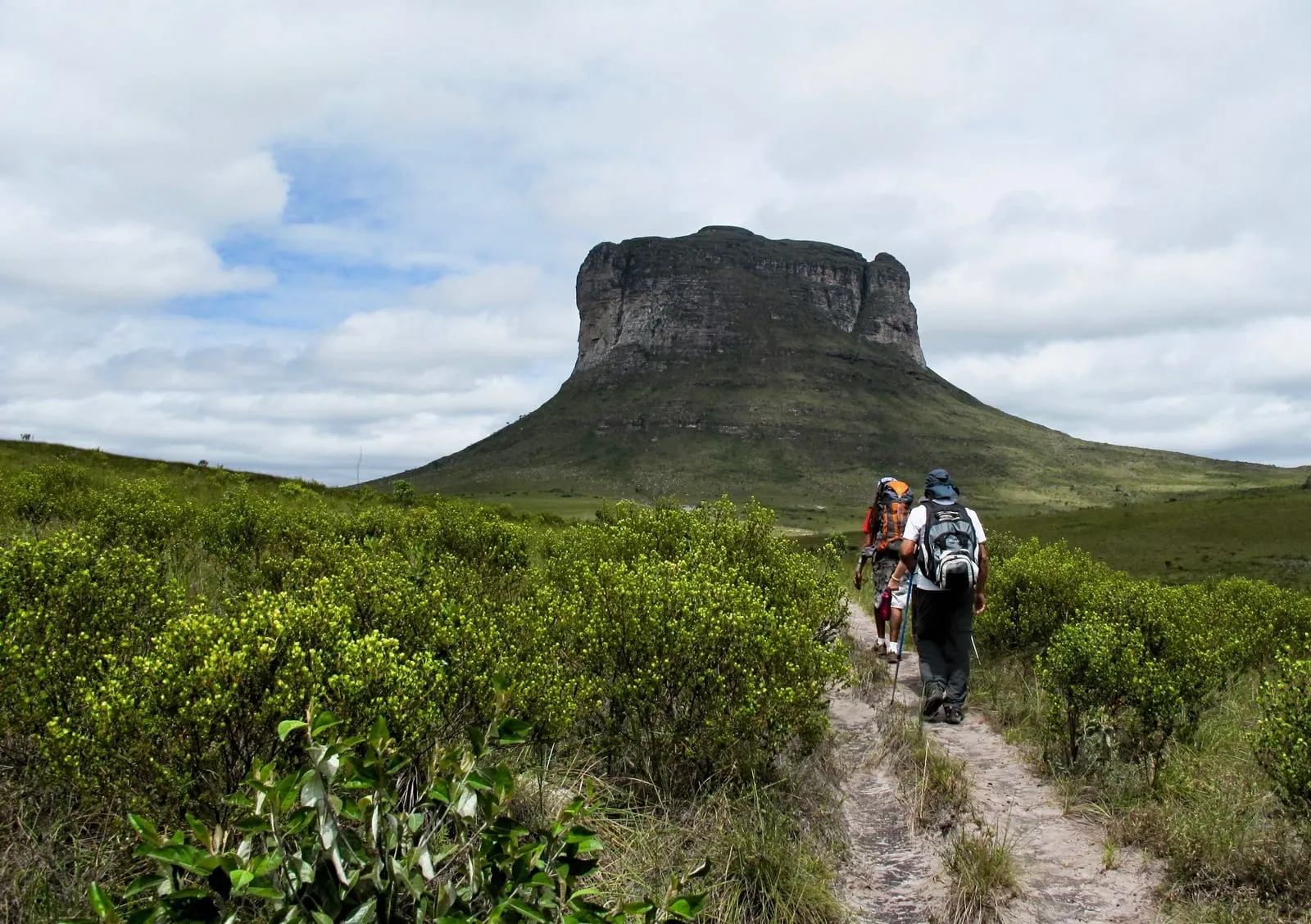
- Sunset: climb Morro do Pai Inácio, a flat-topped mountain with a short, steep trail (about 20–30 minutes). The view over the tabletop mountains at sunset is the postcard image of Chapada Diamantina.
Day 5: Blue pools and caves
Today is about water and light.
- Poço Azul and Poço Encantado: underground lakes of incredibly clear blue water. Sunlight enters through openings in the rock and lights them up like neon, especially from about April to September, in the late morning. At Poço Azul you can float with a snorkel.
- Gruta da Lapa Doce: a huge limestone cave with formations you can explore with a guide and a flashlight.
- Pratinha: a river cave and blue pool where you can snorkel or zip line into the water.
These are a long drive from Lençóis, so this is usually a full-day tour.
Day 6: Cachoeira da Fumaça
The Fumaça (“Smoke”) waterfall drops about 340 meters from the top of a cliff, so high that the water often turns to mist before reaching the bottom. The classic hike goes to the top, from the village of Vale do Capão: about 6 km each way, steep at the start, then flat. You lie on your stomach at the edge of the cliff and look down. Unforgettable.
Fit and adventurous? The multi-day Vale do Pati trek, often called one of the most beautiful in Brazil, takes 3–5 days with a guide, sleeping in local families’ homes. If you love hiking, consider giving it your Morro de São Paulo days.
Read the full Chapada Diamantina guide.
Day 7: Ribeirão do Meio, then back to Salvador
Morning: an easy walk from Lençóis to the Ribeirão do Meio, a natural rock slide into a pool. Kids and adults alike slide down for hours.
Afternoon: take the bus (or flight) back to Salvador. Sleep near the Terminal Marítimo (the boat terminal near the Mercado Modelo) or in Barra.
Day 8: Catamaran to Morro de São Paulo
Catamarans leave from Salvador’s Terminal Marítimo several times a day and take about 2–2.5 hours. The sea can be rough: if you get seasick, take something before the trip, sit at the back and look at the horizon. There is also a longer but calmer route combining a ferry, a bus or van and a short boat.
On arrival, you’ll pay a small environmental fee. There are no cars on the island: porters with wheelbarrows carry your bags to your pousada.
Afternoon. The beaches are named by number: Primeira, Segunda, Terceira and Quarta Praia. Second Beach is the lively one, with bars and music. Third Beach has calm water. Fourth Beach is long and quiet, with natural pools at low tide.
Sunset. Walk up to the lighthouse or the old fort and watch the sunset. In the evening, have dinner in the village and a cocktail on Second Beach.
Day 9: Boat trip around the island
The classic volta à ilha (round-the-island) boat trip stops at natural pools for snorkeling, the beaches of Boipeba (an even quieter neighboring island), and the oyster farms of Cairu, where you eat fresh oysters straight from the water. Lunch at a beach restaurant. It’s a full day.
Read the full Morro de São Paulo guide.
Day 10: Back to Salvador
Enjoy a last swim at the natural pools of Fourth Beach at low tide, then take the catamaran back to Salvador. If you have time before your flight, visit the Igreja do Senhor do Bonfim and tie a fitinha to the gate, and eat a last acarajé in Rio Vermelho.
What it costs (roughly)
Per person, per day, not counting flights to Brazil:
| Style | Per day | What you get |
|---|---|---|
| Budget | R$ 250–400 | Hostels and simple pousadas, PFs, buses, shared tours |
| Mid-range | R$ 600–1,000 | Good pousadas, restaurants, guided tours |
| Comfort | R$ 1,400+ | Boutique pousadas, private guides, flights to Lençóis |
In Chapada Diamantina, guided tours are the main expense. Morro de São Paulo is pricier in high season (December–February and July).
Tips for this route
- Swap the order if you prefer to end in the mountains: Salvador → Morro de São Paulo → Chapada Diamantina → Salvador.
- Bring proper shoes for Chapada Diamantina: trails are rocky, and wet rocks are slippery. Sandals are for the beach.
- Cash: small towns and island kiosks prefer cash or Pix. Bring some reais.
- Listen for Bahian Portuguese: “Oxe!”, “Massa!”, “Arretado!” (awesome) and “Painho” and “Mainha” for dad and mom.
- Carnival: Salvador’s carnival is one of the biggest street parties in the world. Plan months ahead if you want to go.
Useful phrases
- 01
Precisa de guia para essa trilha?
Do I need a guide for this trail?
- 02
A trilha é difícil?
Is the trail hard?
- 03
Quanto tempo leva até a cachoeira?
How long does it take to get to the waterfall?
- 04
Tô cansado, vamos parar um pouco?
I'm tired, shall we stop for a bit?
Said by a man. A woman says "tô cansada". "Tô" is the spoken form of "estou".
- 05
O mar está agitado hoje?
Is the sea rough today?
- 06
Onde fica a Segunda Praia?
Where is Second Beach?
- 07
Oxe, que lugar lindo!
Wow, what a beautiful place!
- 08
Painho / Mainha
Dad / Mom (affectionate)
Very Bahian. You'll also hear them used affectionately with friends.
Audio made with Ed's AI voice. Want to hear the real Ed? Book a lesson