Moqueca baiana
Fish or shrimp stewed with dendê (palm oil), coconut milk, peppers and coriander, served in a clay pot.
"A moqueca é picante?"Is the moqueca spicy?
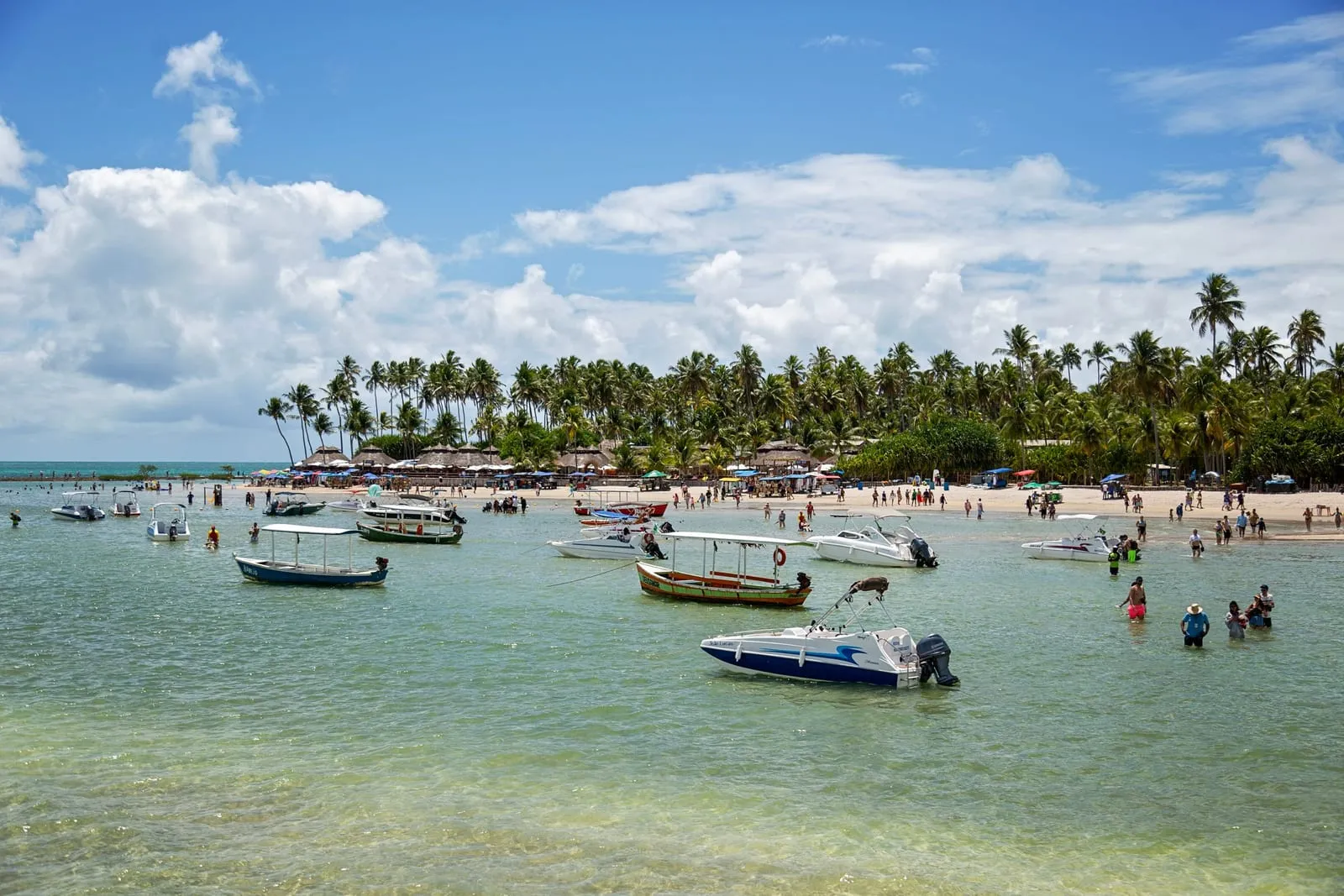
Car-free islands near Salvador with numbered beaches, a zip line from the lighthouse and lazy natural pools, plus the Portuguese you'll need there.
Morro de São Paulo is on the island of Tinharé, south of Salvador. There are no cars, just sand paths, beaches numbered from one to four and a laid-back mix of Brazilian and international travelers. Boipeba, next door, is the quiet version.
It’s a classic add-on to a trip to Salvador. You’ll use your Portuguese with boat captains, porters and beach kiosks, and you’ll hear lots of Bahian expressions like “oxente” and “meu rei”.
Updated November 2026 · by Ed
The Portuguese you'll actually use here. Tap to hear how it sounds, then say it out loud.
Start every question with "Com licença…" (excuse me) and end with "obrigado" (if you're a man) or "obrigada" (if you're a woman).
Que horas sai o catamarã para Salvador?
What time does the catamaran to Salvador leave?
O mar está agitado hoje?
Is the sea rough today?
The catamaran ride can be bumpy. Ask before you buy your ticket.
Quanto é o passeio de volta à ilha?
How much is the round-the-island tour?
Qual praia é mais tranquila?
Which beach is quieter?
Pode levar minha mala até a pousada?
Can you take my suitcase to the pousada?
There are no cars. Porters with wheelbarrows carry luggage from the pier.
Onde fica a tirolesa?
Where is the zip line?
Uma moqueca para dois, por favor.
A moqueca for two, please.
Audio made with Ed's AI voice. Want to hear the real Ed? Book a lesson
Three nights in Morro de São Paulo and one or two in Boipeba.
There are no cars on the islands. You walk, take boats and tractor-taxis.
Many Airbnb houses and pousadas. Choose by beach, Segunda for nightlife, Terceira and Quarta for calm.
With a useful phrase for each one.

Primeira, Segunda, Terceira and Quarta Praia line up along the island. The Segunda is the party beach, the Terceira and Quarta are calmer, with natural pools at low tide.
"Qual é a melhor praia para nadar?"
Which is the best beach for swimming?
Walk up to the old lighthouse for the view, then fly down a long zip line ("tirolesa") straight into the sea at the Primeira Praia.
"Tem limite de peso?"
Is there a weight limit?

A full-day tour that stops at the Garapuá natural pools, the beaches of Moreré and Boipeba, and an oyster stop in the mangroves.
"O almoço está incluído no passeio?"
Is lunch included in the tour?

The neighbor island is even calmer, with a tiny village and the beach of Cueira, famous for grilled lobster. Perfect to slow down.
"Tem lagosta hoje?"
Is there lobster today?
The ruins of a 17th-century fort by the pier are where everyone gathers at sunset, with capoeira, drinks and sometimes dolphins.
"Vamos ver o pôr do sol no forte?"
Shall we watch the sunset at the fort?
The local dishes worth trying, and how to order them.
Fish or shrimp stewed with dendê (palm oil), coconut milk, peppers and coriander, served in a clay pot.
"A moqueca é picante?"Is the moqueca spicy?
A fried black-eyed-pea fritter split and filled with shrimp and vatapá. Bahia's most famous street food.
"Quente ou frio?"Hot or not spicy?

Freshly caught and grilled on the beach in Cueira. Expensive, but worth it once.
"Quanto custa a lagosta?"How much is the lobster?

Tip: in Brazil a pousada is a small guesthouse, often family-run, with breakfast included.
Stay connected from the moment you land: Get a Brazil eSIM (data plan you install before the trip). How it works
Affiliate links: Ed may earn a small commission at no extra cost to you.

Pelourinho, Santo Antônio Além do Carmo, Barra or Rio Vermelho? A local guide to the safest, most atmospheric areas to stay in Salvador, Bahia, with hotel links and Portuguese phrases.
Read guide
A 10-day Bahia itinerary with Afro-Brazilian Salvador, the canyons, caves and waterfalls of Chapada Diamantina and the car-free island beaches of Morro de São Paulo. Day by day, with transport, costs and Bahian phrases.
Read guide2–2.5 h by catamaran. Catamarans leave Salvador's Terminal Náutico several times a day. Alternatively, take the ferry to Itaparica, a van and a speedboat. Visitors pay a small island tax on arrival.
Sep–Mar. Sunny and lively. April to July is rainier and quieter. Summer holidays and Carnival are packed.
Around R$ 450–900 / day. Rough mid-range estimate per person (pousada, meals and one boat tour).
3–5 days. Three nights in Morro de São Paulo and one or two in Boipeba.
Not needed. There are no cars on the islands. You walk, take boats and tractor-taxis.
Vila and Segunda Praia: Close to the pier, restaurants and nightlife. Terceira and Quarta Praia: Calmer pousadas with natural pools at the door. Boipeba: Simple, charming pousadas in a small village. Slow and peaceful.
Many Airbnb houses and pousadas. Choose by beach, Segunda for nightlife, Terceira and Quarta for calm.
Some people in hotels and tourist businesses speak English, but most locals speak only Portuguese. Learning a few phrases, like the ones in this guide, makes your trip much easier and Brazilians really appreciate the effort.
Everything on this site is free, and it'll stay that way. If you'd like extra help, here's what Ed offers:

A car-free island of empty beaches, natural pools and fresh lobster, the quiet neighbor of Morro de São Paulo, plus the Portuguese you'll need there.

Surf, Atlantic rainforest, hidden beaches reached by trails and chocolate farms, plus the Portuguese you'll need there.

Colorful colonial streets, Afro-Brazilian culture and drums in the air, plus the Bahian Portuguese to join in.
20 essential phrases and a simple 7-day plan to start speaking real Brazilian Portuguese.