Tacacá
A hot soup of tucupi (yellow manioc broth), jambu leaves that make your lips tingle, and dried shrimp. Served in a gourd.
"Por que a minha boca está tremendo?"Why is my mouth tingling?
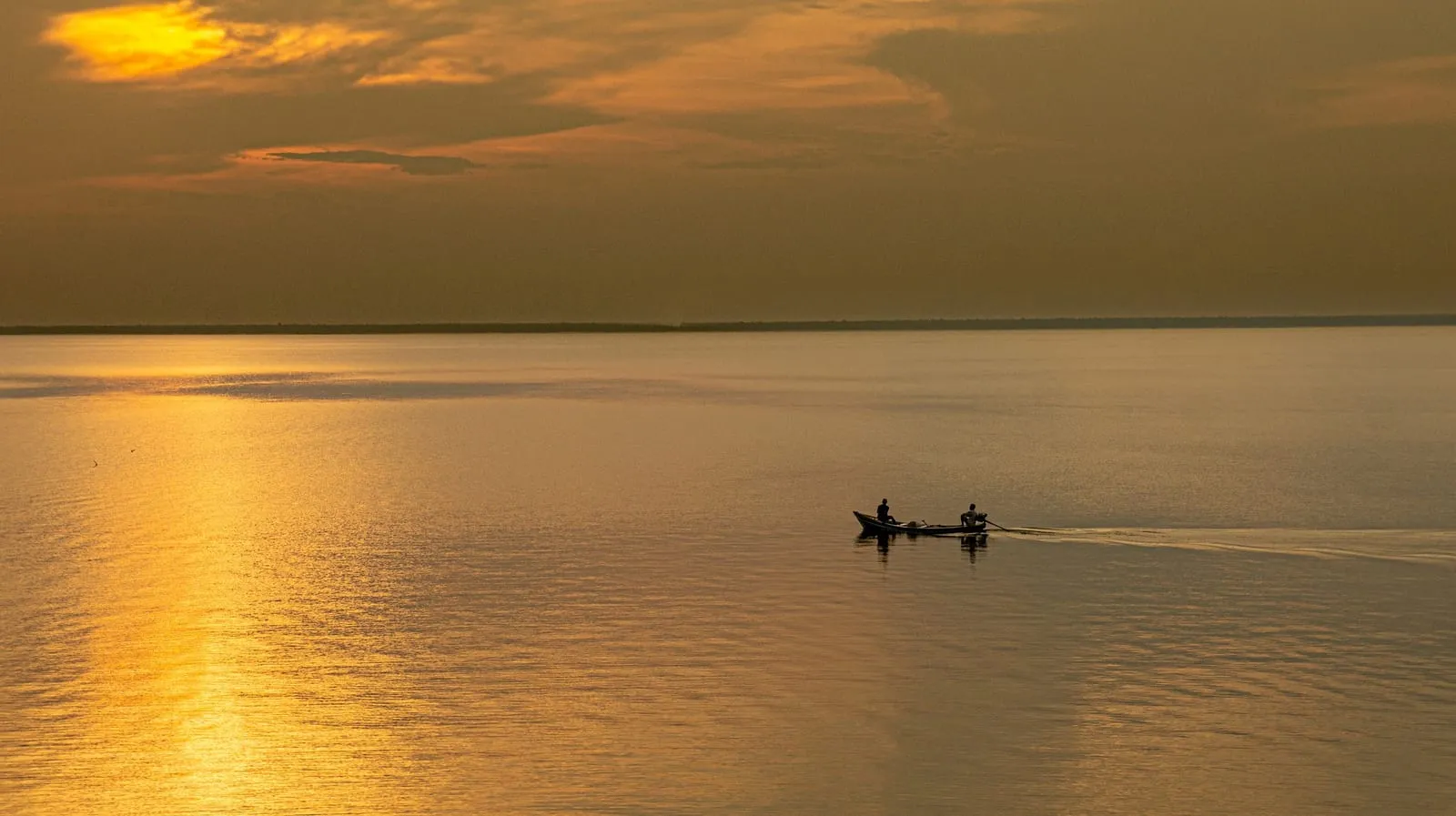
White-sand beaches on a giant Amazon river, river dolphins and the rainforest at your door, plus the Portuguese you'll need there.
Alter do Chão is a small village on the Tapajós, a huge clear-water river in the middle of the Amazon. When the water goes down, white-sand beaches appear along its banks, which is why it’s sometimes called the “Caribe amazônico” (Amazonian Caribbean). It’s the easiest place in Brazil to combine the beach and the rainforest.
People here are calm, welcoming and often of indigenous and riverside (“ribeirinho”) origin. Boat drivers and community guides rarely speak English, so Portuguese makes a real difference, especially when they tell you stories about the forest.
Updated November 2026 · by Ed
The Portuguese you'll actually use here. Tap to hear how it sounds, then say it out loud.
Start every question with "Com licença…" (excuse me) and end with "obrigado" (if you're a man) or "obrigada" (if you're a woman).
Quanto é a travessia para a Ilha do Amor?
How much is the crossing to Ilha do Amor?
Small boats called "catraias" take you across in a couple of minutes.
A praia já apareceu?
Has the beach appeared yet?
The river beaches only appear when the water level drops, from about August.
Dá para ver o boto?
Can we see the river dolphin?
Me vê um tacacá, por favor.
Can I have a tacacá, please?
Esse açaí é com peixe ou com açúcar?
Is this açaí with fish or with sugar?
Quanto tempo de barco até a FLONA?
How long by boat to the national forest?
Tem muito mosquito à noite?
Are there many mosquitoes at night?
Audio made with Ed's AI voice. Want to hear the real Ed? Book a lesson
Enough for the beaches, a night in the forest and a few boat trips. Add days if you arrive by riverboat.
The village is small and walkable. Boats and tours take you everywhere else.
Several Airbnbs and simple pousadas. In the forest communities you stay in basic community lodges.
With a useful phrase for each one.

A sand bank right in front of the village, with simple beach shacks serving fish and cold drinks. Climb the Serra da Piroca hill nearby for the best view of the area.
"Pode trazer mais uma cerveja bem gelada?"
Can you bring another really cold beer?

Stay with or visit riverside communities like Jamaraquá and walk under giant samaúma trees, learn about rubber tapping and taste local food.
"Quantos anos tem essa árvore?"
How old is this tree?

A boat trip to a sandy point on the river, where you can often see pink river dolphins ("botos") at the end of the day.
"Olha o boto ali!"
Look at the dolphin over there!

Kayak or take a boat through a flooded forest channel, with sloths, monkeys and birds in the trees.
"Tem preguiça nessa árvore?"
Is there a sloth in that tree?

In September, the village hosts a centuries-old festival that ends with a show between two dolphin groups, the Boto Tucuxi and the Boto Cor-de-Rosa.
"Você torce para qual boto?"
Which dolphin group do you support?
The local dishes worth trying, and how to order them.
A hot soup of tucupi (yellow manioc broth), jambu leaves that make your lips tingle, and dried shrimp. Served in a gourd.
"Por que a minha boca está tremendo?"Why is my mouth tingling?

Grilled tucunaré, pirarucu or tambaqui. The Tapajós has some of the best river fish in Brazil.
"Qual peixe você recomenda?"Which fish do you recommend?

In the Amazon, açaí is thick, purple, unsweetened and eaten with fish and manioc flour, not with granola.
"Posso provar com farinha?"Can I try it with manioc flour?

Tip: in Brazil a pousada is a small guesthouse, often family-run, with breakfast included.
Stay connected from the moment you land: Get a Brazil eSIM (data plan you install before the trip). How it works
Affiliate links: Ed may earn a small commission at no extra cost to you.
Fly to Santarém, then 40 min. Santarém airport (STM) is about 35 km away. Take a taxi or a bus. You can also arrive by riverboat from Manaus or Belém.
Aug–Dec. Low water season, when the white-sand beaches appear. From about February to June the river rises and covers most of them.
Around R$ 300–600 / day. Rough mid-range estimate per person (pousada, meals and one boat tour).
4–5 days. Enough for the beaches, a night in the forest and a few boat trips. Add days if you arrive by riverboat.
Not needed. The village is small and walkable. Boats and tours take you everywhere else.
Village center: Near the square, the restaurants and the boats to Ilha do Amor. Around the lake (Lago Verde): Quieter pousadas surrounded by nature, a short walk from the center. Forest communities: A night in Jamaraquá or Maguari for the full Amazon experience.
Several Airbnbs and simple pousadas. In the forest communities you stay in basic community lodges.
Some people in hotels and tourist businesses speak English, but most locals speak only Portuguese. Learning a few phrases, like the ones in this guide, makes your trip much easier and Brazilians really appreciate the effort.
Everything on this site is free, and it'll stay that way. If you'd like extra help, here's what Ed offers:

An island town in the Amazon river that splits in red and blue every June for one of Brazil's biggest folk festivals, plus the Portuguese you'll need there.

The Amazon's food capital, real açaí and the white river beaches of Alter do Chão, plus the Portuguese you'll need there.

The gateway to the Amazon rainforest, with jungle lodges, river dolphins and the Meeting of the Waters, plus the Portuguese you'll need on the river.

20 essential phrases and a simple 7-day plan to start speaking real Brazilian Portuguese.