Moqueca baiana
Fish or shrimp cooked in coconut milk and palm oil, served in a clay pot with rice and farofa.
"Essa moqueca leva dendê?"Does this moqueca have palm oil?
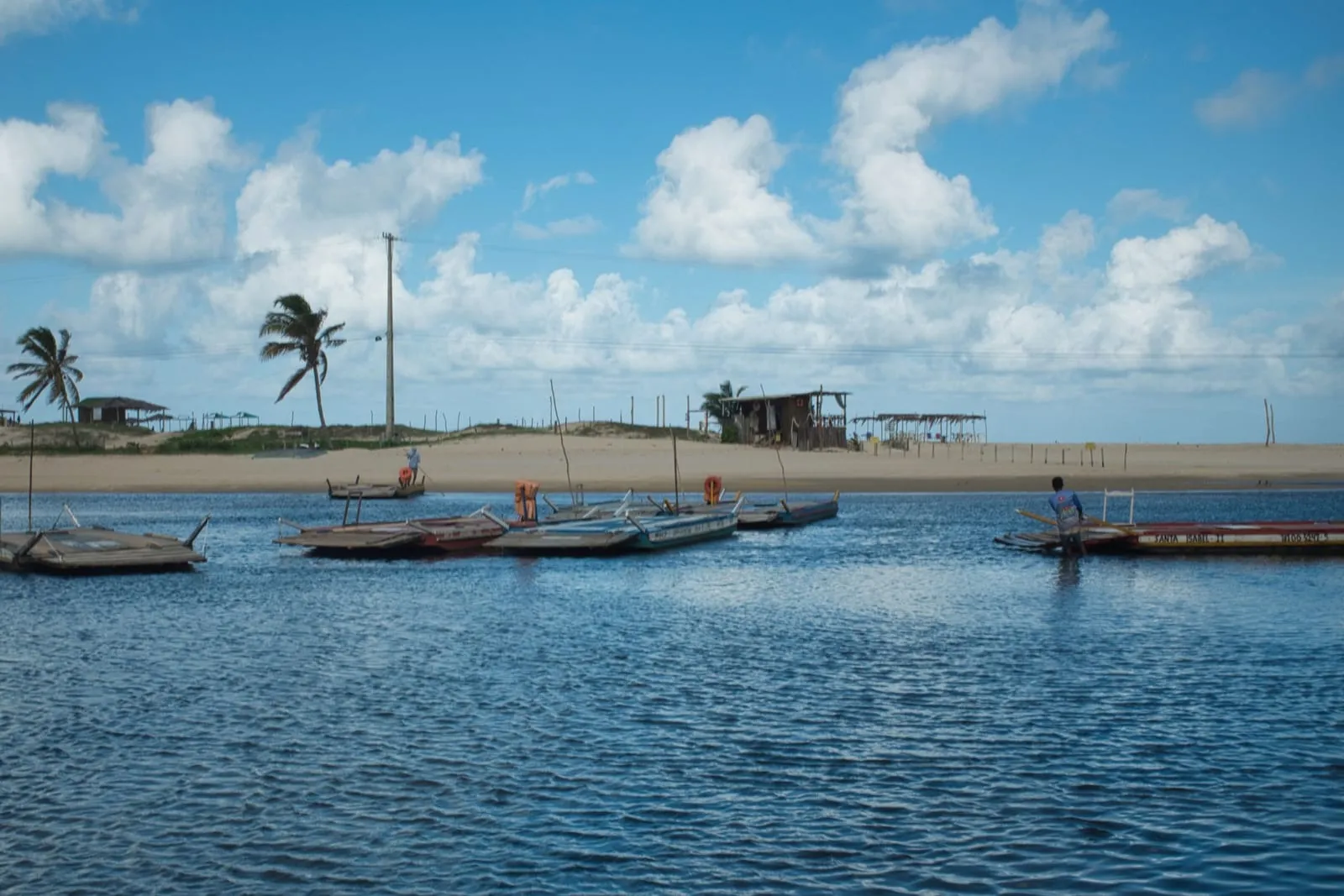
A car-free village of sand streets between a river and the sea, reached by canoe, plus the Portuguese you'll need there.
Caraíva is a small village in the south of Bahia, about 65 km from Trancoso, between the Caraíva River and the Atlantic. For a long time it was isolated, and electricity only arrived in 2007. Today it has pousadas and restaurants, but no cars, no paved streets and a rhythm that makes many visitors stay longer than planned.
The village is home to fishermen, artists and people from all over Brazil who came and never left. The Pataxó people have lived in the region for centuries. It’s a great place to practice relaxed, everyday Portuguese.
Updated November 2026 · by Ed
The Portuguese you'll actually use here. Tap to hear how it sounds, then say it out loud.
Start every question with "Com licença…" (excuse me) and end with "obrigado" (if you're a man) or "obrigada" (if you're a woman).
Quanto é a travessia de canoa?
How much is the canoe crossing?
Você pode levar minha mala?
Can you carry my suitcase?
There are no cars in Caraíva. Locals carry bags in wheelbarrows or on carts for a small fee.
Onde tem forró hoje à noite?
Where is there forró tonight?
Dá para ir andando até a praia do Espelho?
Can we walk to Praia do Espelho?
Aceita cartão?
Do you take cards?
Most places take cards now, but connections can fail. Bring some cash.
A maré está subindo?
Is the tide coming in?
Que lugar tranquilo!
What a peaceful place!
Audio made with Ed's AI voice. Want to hear the real Ed? Book a lesson
Caraíva is about slowing down. Three days for the village and the beaches, more if you want to disconnect.
Cars can't enter the village. Leave the car on the other side of the river, or come by bus or transfer.
Simple Airbnb houses and charming pousadas, many with gardens. Book early for holidays.
With a useful phrase for each one.

Every arrival starts on the Caraíva River, crossed in small wooden canoes. On the other side, sand streets and colorful houses, with no cars at all.
"Até que horas tem canoa?"
Until what time are there canoes?

At the end of the village, the river flows into the ocean. Float down the river with the current, or relax in the calm water at the mouth.
"Dá para descer o rio boiando?"
Can we float down the river?

About 1 h 30 on foot or by boat to the north, one of the most beautiful beaches in Bahia, with natural pools at low tide and colorful cliffs.
"A que horas a maré baixa?"
What time is low tide?

South of the village lives the Pataxó people. Visits are arranged with local guides, and you can learn about their culture and buy their crafts.
"Posso tirar foto?"
Can I take a photo?

When the sun goes down, Caraíva dances. Forró bars play live music until late, under a sky full of stars.
"Você me ensina o passo?"
Will you teach me the step?
The local dishes worth trying, and how to order them.
Fish or shrimp cooked in coconut milk and palm oil, served in a clay pot with rice and farofa.
"Essa moqueca leva dendê?"Does this moqueca have palm oil?

Fish wrapped in banana leaf and grilled, a local favorite.
"Qual é o peixe do dia?"What's the fish of the day?

Thick, frozen açaí in a bowl with granola and banana, perfect after the beach.
"Me vê um açaí de 500 com granola."Can I have a 500 ml açaí with granola?

Tip: in Brazil a pousada is a small guesthouse, often family-run, with breakfast included.
Stay connected from the moment you land: Get a Brazil eSIM (data plan you install before the trip). How it works
Affiliate links: Ed may earn a small commission at no extra cost to you.
2 h 30 by road from Porto Seguro. From Porto Seguro airport (BPS), drive or take a bus to the riverbank (the last part is a dirt road), then cross the river by canoe.
Sep–Mar. Sunny and warm. New Year's and Carnival are packed and expensive. April to June is the rainiest period.
Around R$ 350–800 / day. Rough mid-range estimate per person. Caraíva is rustic but not cheap, especially in high season.
3–5 days. Caraíva is about slowing down. Three days for the village and the beaches, more if you want to disconnect.
Not needed. Cars can't enter the village. Leave the car on the other side of the river, or come by bus or transfer.
Village center: Close to the restaurants, the river and the forró bars. Near the beach: Pousadas facing the sea, a few minutes from the center. Riverside: Quiet houses with views of the river and the mangroves.
Simple Airbnb houses and charming pousadas, many with gardens. Book early for holidays.
Some people in hotels and tourist businesses speak English, but most locals speak only Portuguese. Learning a few phrases, like the ones in this guide, makes your trip much easier and Brazilians really appreciate the effort.
Everything on this site is free, and it'll stay that way. If you'd like extra help, here's what Ed offers:

A colonial grass square above the sea, chic pousadas and some of Bahia's most beautiful beaches, plus the Portuguese you'll need there.

Where Brazil's history began, with colorful villages on the cliffs, cliff-backed beaches and the charming Quadrado of Trancoso, plus the Portuguese you'll need there.

Surf, Atlantic rainforest, hidden beaches reached by trails and chocolate farms, plus the Portuguese you'll need there.

20 essential phrases and a simple 7-day plan to start speaking real Brazilian Portuguese.