Pastel de angu
A small fried pastry made with cornmeal dough, filled with meat. A Diamantina specialty.
"Me vê três, por favor."I'll have three, please.
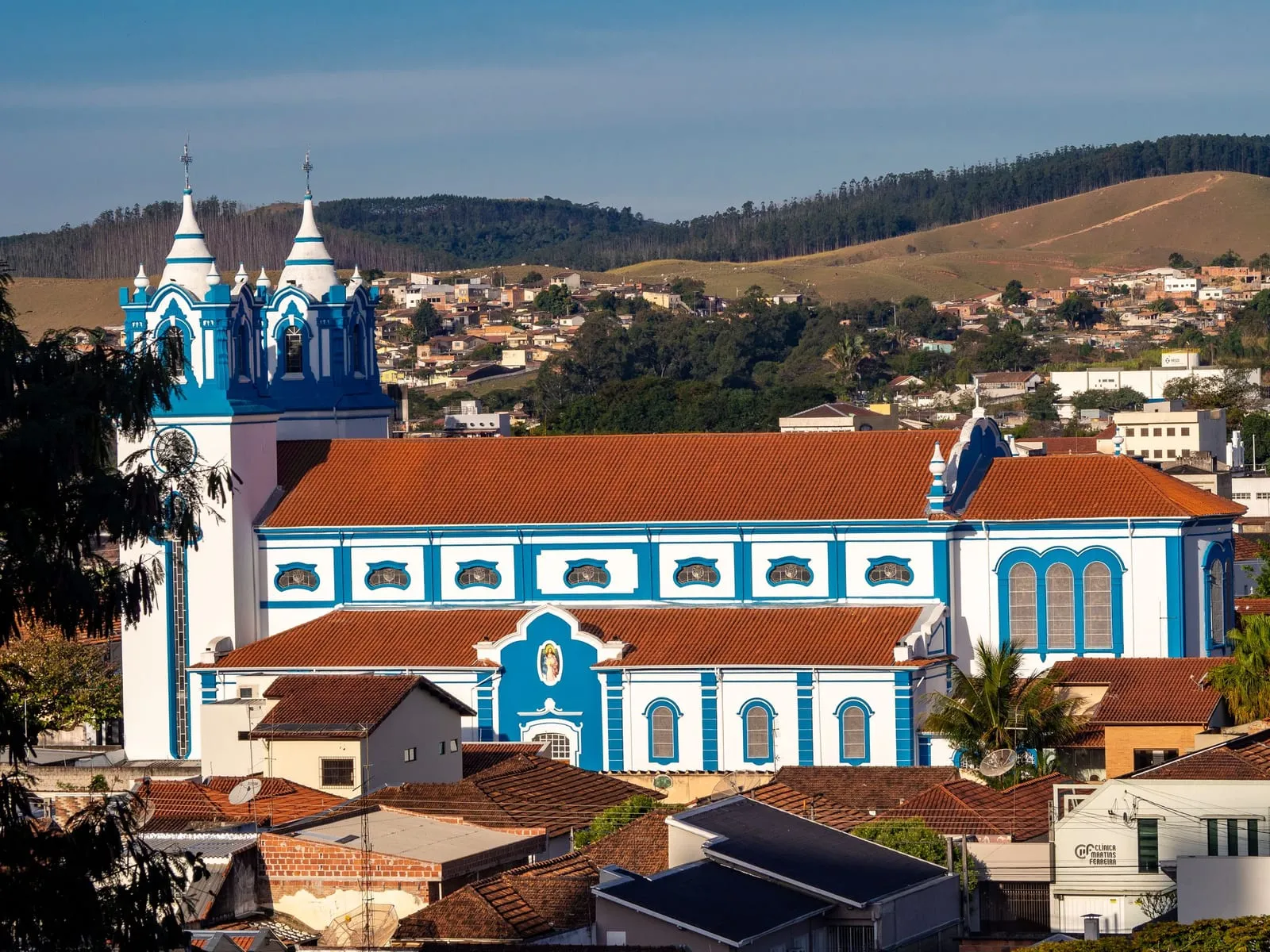
A colonial diamond town in the mountains, with serenades from the balconies, stone paths and waterfalls, plus the Portuguese you'll need there.
In the 18th century, diamonds were found in the rivers around Diamantina, and the town became one of the richest places in the Portuguese empire. The Crown controlled the region tightly, but the wealth built baroque churches, elegant houses and a strong musical tradition that still lives on. Today it’s one of the best-preserved colonial towns in Brazil, high in the Serra do Espinhaço.
It’s quieter and less touristy than Ouro Preto, and the locals are proud of their history and their music. Mineiros speak softly, use lots of diminutives (“cafezinho”, “pertinho”) and love a long chat.
Updated November 2026 · by Ed
The Portuguese you'll actually use here. Tap to hear how it sounds, then say it out loud.
Start every question with "Com licença…" (excuse me) and end with "obrigado" (if you're a man) or "obrigada" (if you're a woman).
Quando tem Vesperata?
When is there a Vesperata?
In the Vesperata, musicians play from the balconies of old houses while the conductor stands in the street. Dates are usually Saturdays between April and October.
Onde fica a casa da Chica da Silva?
Where is Chica da Silva's house?
Essa igreja é de que século?
Which century is this church from?
Como eu chego no Biribiri?
How do I get to Biribiri?
Tem pastel de angu?
Do you have pastel de angu?
Uai, sô!
Well, man!
A typical Minas expression. Sô is short for senhor and is used like "man" or "buddy".
Pode me recomendar uma cachaça daqui?
Can you recommend a local cachaça?
Audio made with Ed's AI voice. Want to hear the real Ed? Book a lesson
Two days for the town and a third for Biribiri and the waterfalls. Try to be there on a Vesperata Saturday.
The historic center is walkable. A car is useful for Biribiri and the waterfalls.
A few Airbnbs in old houses and many charming pousadas in the center.
With a useful phrase for each one.

Stone streets, white houses with colorful windows and baroque churches, a UNESCO World Heritage Site since 1999. Don't miss the Passadiço da Glória, a blue covered bridge between two buildings.
"Posso entrar para ver?"
Can I go in to see?

A unique concert. Musicians play from the balconies of the old houses, and the audience listens from tables in the street below.
"Precisa comprar mesa?"
Do we need to buy a table?

Visit the house of Chica da Silva, a formerly enslaved woman who became one of the most powerful people of colonial Diamantina, and the childhood home of President Juscelino Kubitschek, who built Brasília.
"Quem foi a Chica da Silva?"
Who was Chica da Silva?

About 15 km away, a tiny, abandoned textile village inside a state park, with waterfalls and natural pools nearby.
"Dá para nadar na cachoeira?"
Can we swim in the waterfall?

A stone path built by enslaved people in the 18th century, through the rocky mountains around the city. A strong reminder of the town's history.
"Quantos quilômetros tem a trilha?"
How many kilometers is the trail?
The local dishes worth trying, and how to order them.
A small fried pastry made with cornmeal dough, filled with meat. A Diamantina specialty.
"Me vê três, por favor."I'll have three, please.

Chicken cooked with ora-pro-nóbis, a green leaf rich in protein, used a lot in Minas cooking.
"O que é ora-pro-nóbis?"What is ora-pro-nóbis?

Minas Gerais makes Brazil's most famous doce de leite, often served with a slice of fresh cheese.
"Com queijo, por favor."With cheese, please.

Tip: in Brazil a pousada is a small guesthouse, often family-run, with breakfast included.
Stay connected from the moment you land: Get a Brazil eSIM (data plan you install before the trip). How it works
Affiliate links: Ed may earn a small commission at no extra cost to you.
4 h 30 by road from Belo Horizonte. Diamantina is about 290 km from Belo Horizonte airport (CNF). Rent a car or take a bus.
Apr–Oct. Dry season, with cool, sunny days and the Vesperata concerts. Nights can be cold in winter.
Around R$ 300–600 / day. Rough mid-range estimate per person (pousada, meals and entrance fees).
2–3 days. Two days for the town and a third for Biribiri and the waterfalls. Try to be there on a Vesperata Saturday.
Optional. The historic center is walkable. A car is useful for Biribiri and the waterfalls.
Historic center: Walk to everything. The best choice for a short stay. Near the center: Cheaper pousadas, a few minutes on foot from the main sights. Countryside: Farms and chalets for nature lovers, with a car.
A few Airbnbs in old houses and many charming pousadas in the center.
Some people in hotels and tourist businesses speak English, but most locals speak only Portuguese. Learning a few phrases, like the ones in this guide, makes your trip much easier and Brazilians really appreciate the effort.
Everything on this site is free, and it'll stay that way. If you'd like extra help, here's what Ed offers:

Rocky mountains, river canyons and waterfalls an hour from Belo Horizonte, plus the lake village of Lapinha da Serra, and the Portuguese you'll need there.

A baroque gold-rush town of steep cobblestone hills and golden churches, plus the mineiro Portuguese you'll hear there.

A tiny gold-rush town of stone streets, golden churches and the best food in Minas, plus the Portuguese you'll need there.

20 essential phrases and a simple 7-day plan to start speaking real Brazilian Portuguese.