Pamonha and canjica
Corn is king in June. Pamonha is a sweet or savory corn paste cooked in the husk, and canjica is a creamy corn pudding with cinnamon.
"A pamonha é doce ou salgada?"Is the pamonha sweet or savory?
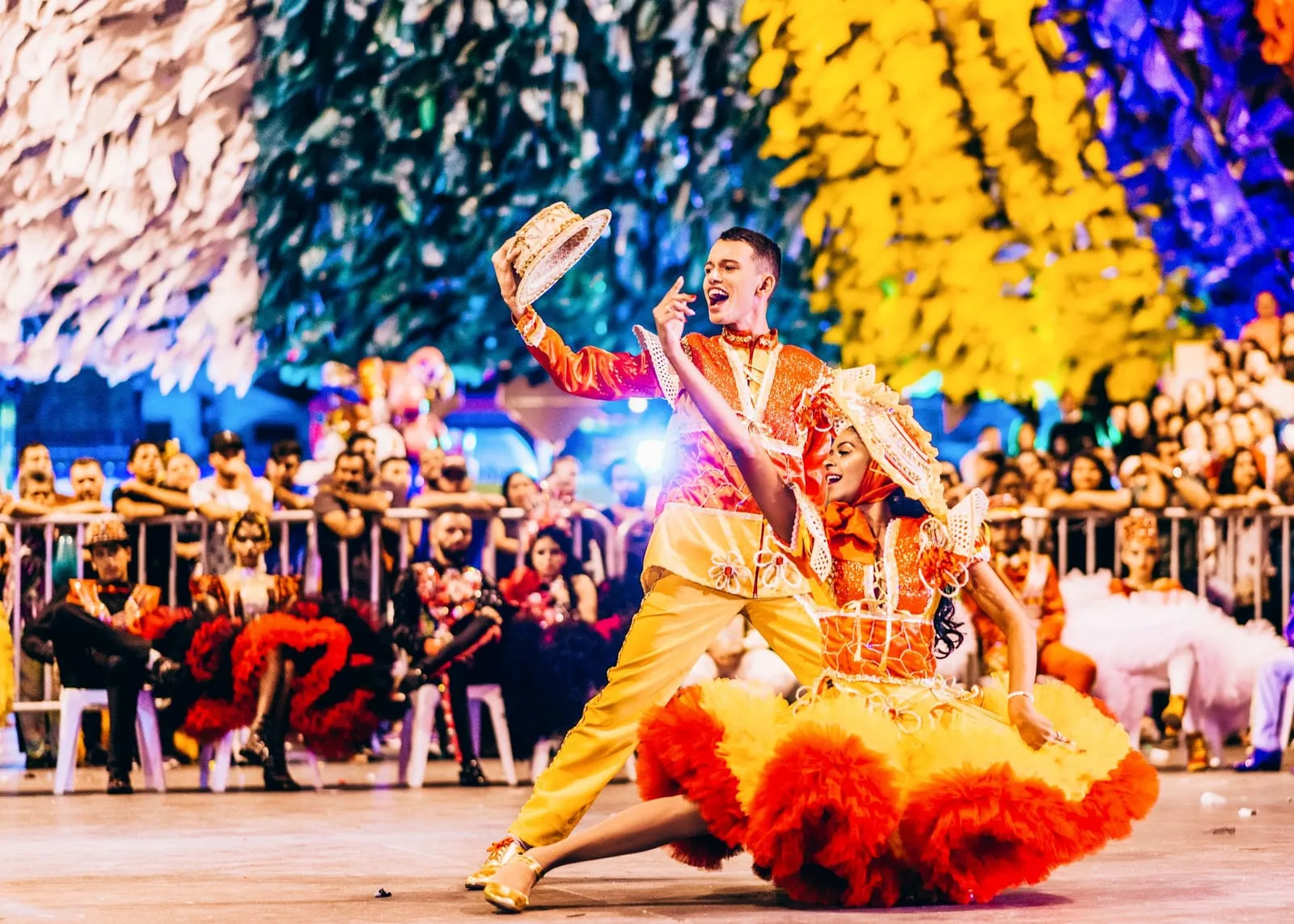
Home of "the biggest São João in the world", a month of forró, bonfires, quadrilha dances and corn treats every June, plus the Portuguese you'll need there.
Campina Grande is the second largest city of Paraíba, in the hills of the Borborema plateau, and every June it becomes the capital of Brazil’s most loved popular celebration: São João. For a whole month, the city fills with forró music, bonfires, colorful flags, quadrilha dances and corn-based food, and it calls its party “O Maior São João do Mundo”.
São João mixes Catholic saints with countryside traditions of the Northeast, and it’s a fantastic way to see Brazilian culture from the inside. You’ll hear the Paraíba accent, lots of “vixe” and “oxe”, and plenty of songs by Luiz Gonzaga.
Updated November 2026 · by Ed
The Portuguese you'll actually use here. Tap to hear how it sounds, then say it out loud.
Start every question with "Com licença…" (excuse me) and end with "obrigado" (if you're a man) or "obrigada" (if you're a woman).
Viva São João!
Long live Saint John!
The classic shout of the June festivals. Answer with another "Viva!".
Quem vai tocar hoje no Parque do Povo?
Who's playing at Parque do Povo tonight?
Tem pamonha e canjica?
Do you have pamonha and canjica?
Quer dançar comigo?
Do you want to dance with me?
Que horas sai o trem do forró?
What time does the forró train leave?
Anarriê!
(a call in the quadrilha dance)
Quadrilha dance calls come from old French dance commands. "Anarriê" comes from "en arrière", meaning backwards.
Vixe, tá lotado!
Wow, it's packed!
Audio made with Ed's AI voice. Want to hear the real Ed? Book a lesson
Three nights is a good taste of São João. Many Brazilians stay a week. Outside June, one or two days are enough.
During São João, traffic is chaotic. Use apps, taxis and your feet.
Many apartments and houses on Airbnb, but prices rise a lot in June. Book early.
With a useful phrase for each one.

Every June, a huge park in the center becomes a festival town with stages, forró houses, food stalls and decorations. Big names of Brazilian music play almost every night, and entry is usually free.
"A entrada no Parque do Povo é gratuita?"
Is entry to Parque do Povo free?

Groups in colorful country costumes perform theatrical square dances, telling the story of a countryside wedding. The competitions are serious and spectacular.
"Qual quadrilha ganhou o ano passado?"
Which quadrilha group won last year?

A party train with live forró bands on board, traveling from Campina Grande to nearby villages during the festival.
"A passagem inclui comida?"
Does the ticket include food?

A reservoir in the center, with a walkway and the Museum of Popular Art of Paraíba, a building shaped like three tambourines.
"O museu tem exposição sobre o forró?"
Does the museum have an exhibition about forró?

Small recreated villages and nearby districts host traditional forró pé-de-serra, with accordion, zabumba and triangle, for those who prefer something more authentic.
"Onde tem forró pé de serra?"
Where is there traditional forró?
The local dishes worth trying, and how to order them.
Corn is king in June. Pamonha is a sweet or savory corn paste cooked in the husk, and canjica is a creamy corn pudding with cinnamon.
"A pamonha é doce ou salgada?"Is the pamonha sweet or savory?

Corn on the cob roasted on bonfires and street grills, the smell of São João.
"Um milho assado com manteiga."A roasted corn with butter.

Sun-dried salted beef with cassava, beans and bottle butter, the classic dish of the Paraíba interior.
"A carne de sol vem com macaxeira?"Does the carne de sol come with cassava?

Tip: in Brazil a pousada is a small guesthouse, often family-run, with breakfast included.
Stay connected from the moment you land: Get a Brazil eSIM (data plan you install before the trip). How it works
Affiliate links: Ed may earn a small commission at no extra cost to you.
2 h by road from João Pessoa. Campina Grande is about 130 km from João Pessoa airport (JPA) and 190 km from Recife (REC). The city's small airport (CPV) has a few flights. Buses leave often from João Pessoa and Recife.
June. The São João festival lasts the whole month of June, with the biggest nights around June 23 and 24. Book months ahead. The rest of the year the city is calm and pleasant, cooler than the coast.
Around R$ 250–600 / day. Rough mid-range estimate per person (hotel, food and drinks). Hotel prices jump during São João.
3–5 days. Three nights is a good taste of São João. Many Brazilians stay a week. Outside June, one or two days are enough.
Not needed. During São João, traffic is chaotic. Use apps, taxis and your feet.
Center: Walk to Parque do Povo and the Açude Velho. Prata and Catolé: Residential neighborhoods with good hotels and restaurants. João Pessoa: Some people stay on the coast and come for the nights, but the drive is long.
Many apartments and houses on Airbnb, but prices rise a lot in June. Book early.
Some people in hotels and tourist businesses speak English, but most locals speak only Portuguese. Learning a few phrases, like the ones in this guide, makes your trip much easier and Brazilians really appreciate the effort.
Everything on this site is free, and it'll stay that way. If you'd like extra help, here's what Ed offers:

The capital of forró, with a giant São João, one of Brazil's most famous markets and a village of clay artists, plus the Portuguese you'll need there.

The easternmost point of the Americas, sunsets to a saxophone and calm, warm beaches, plus the Portuguese you'll need there.

A historic port city, a colorful colonial town on the hill and warm natural pools at the beach, plus the Portuguese you'll need to enjoy all three.
20 essential phrases and a simple 7-day plan to start speaking real Brazilian Portuguese.