Ostras
Fresh oysters from the mangroves, served raw, steamed or gratinated, at very good prices.
"Uma dúzia de ostras frescas."A dozen fresh oysters.
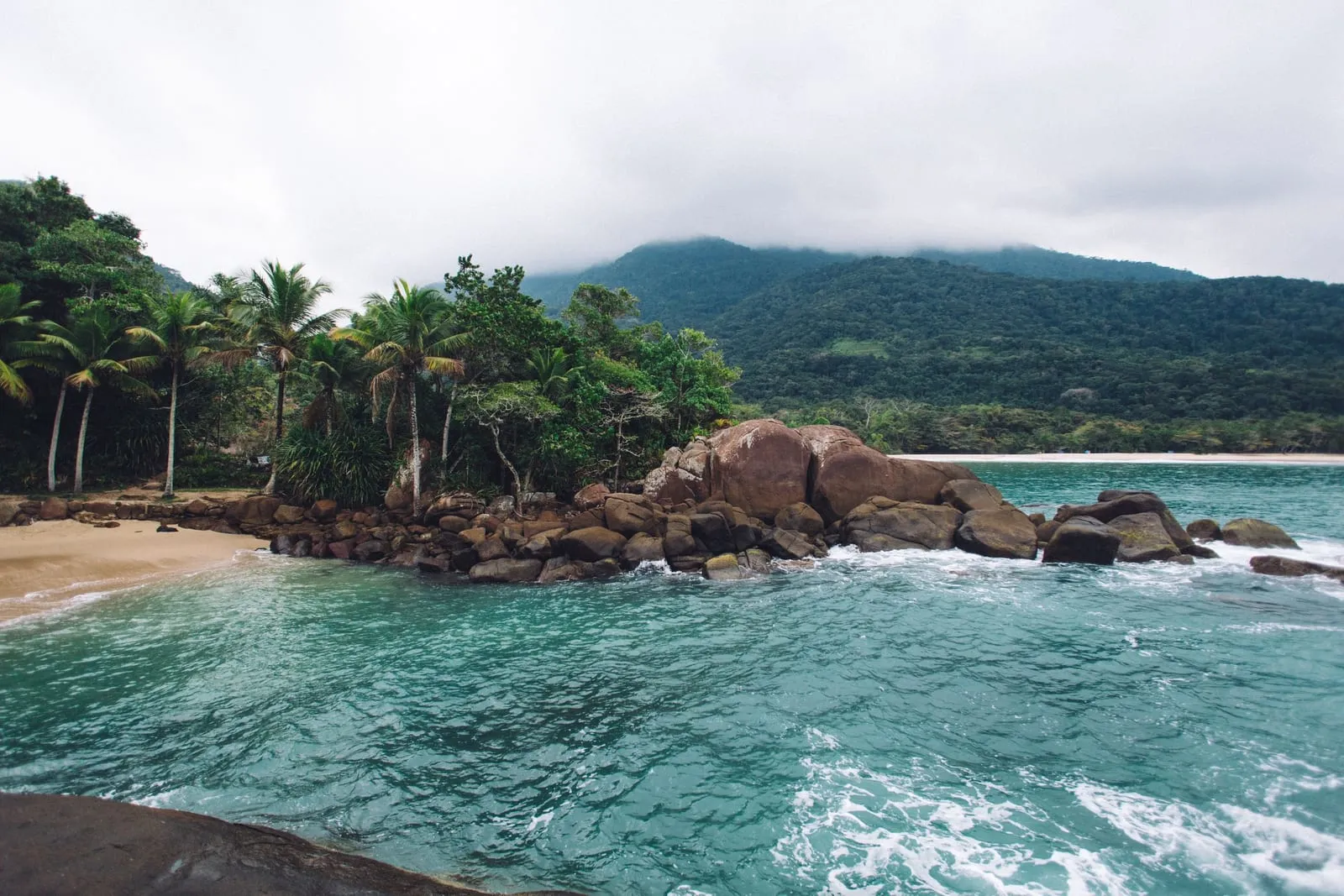
One of the oldest towns in Brazil, mangroves full of dolphins and a wild island of empty beaches and traditional fishing villages, plus the Portuguese you'll need there.
Cananéia, on the far southern coast of São Paulo, was founded in 1531 and is one of the oldest towns in Brazil. It sits in a huge estuary of mangroves and islands, part of the largest preserved stretch of Atlantic forest in the country, recognized by UNESCO as a World Heritage Site.
From here, boats go to Ilha do Cardoso, a wild island of mountains and empty beaches with traditional caiçara fishing villages, and to the mangroves where dolphins swim close to the boats. It’s quiet, untouched and very authentic.
Updated November 2026 · by Ed
The Portuguese you'll actually use here. Tap to hear how it sounds, then say it out loud.
Start every question with "Com licença…" (excuse me) and end with "obrigado" (if you're a man) or "obrigada" (if you're a woman).
Dá para ver os golfinhos hoje?
Can we see the dolphins today?
O barco para a Ilha do Cardoso sai que horas?
What time does the boat to Ilha do Cardoso leave?
As ostras são cultivadas aqui?
Are the oysters farmed here?
Precisa de autorização para acampar na ilha?
Do you need permission to camp on the island?
Quanto tempo leva a travessia?
How long does the crossing take?
A comunidade caiçara vende comida?
Does the caiçara community sell food?
Caiçaras are the traditional fishing communities of the coast of São Paulo, Paraná and Rio, with their own culture and accent.
Que lugar preservado!
What an unspoiled place!
Audio made with Ed's AI voice. Want to hear the real Ed? Book a lesson
Two days for the town, the dolphins and the mangroves. Add one or two nights on Ilha do Cardoso.
A car helps to arrive and visit Ilha Comprida. On Ilha do Cardoso, you walk or take boats.
Some houses on Airbnb in Cananéia and Ilha Comprida. On Ilha do Cardoso, simple pousadas and campsites run by locals.
With a useful phrase for each one.

A state park island with forested mountains, empty beaches and caiçara fishing villages, like Marujá and Pontal do Leste. No cars, few visitors and a lot of nature.
"Tem pousada na ilha?"
Is there a guesthouse on the island?

The calm waters of the estuary are home to the Guiana dolphin (boto-cinza). Boat tours often see them from very close.
"Os golfinhos chegam perto do barco?"
Do the dolphins come close to the boat?

The Mandira extractive reserve is a community-run oyster farm in the mangroves. Visit, learn how they work and eat oysters straight from the water.
"Como vocês cultivam as ostras?"
How do you farm the oysters?

Founded in 1531, Cananéia claims to be one of the oldest towns in Brazil. Walk among colonial houses and the old church by the waterfront.
"Essa igreja é de que século?"
Which century is this church from?

A long island next door with more than 70 km of beach, dunes and a relaxed holiday atmosphere, reached by ferry or bridge.
"A balsa para Ilha Comprida é de graça?"
Is the ferry to Ilha Comprida free?
The local dishes worth trying, and how to order them.
Fresh oysters from the mangroves, served raw, steamed or gratinated, at very good prices.
"Uma dúzia de ostras frescas."A dozen fresh oysters.

Tiny fried fish caught in the estuary, a classic snack of the southern coast of São Paulo.
"A manjuba vem com limão?"Does the manjuba come with lemon?

Caiçara-style fish cooked with green banana, a traditional dish of the coastal communities.
"Esse prato é caiçara?"Is this a caiçara dish?

Tip: in Brazil a pousada is a small guesthouse, often family-run, with breakfast included.
Stay connected from the moment you land: Get a Brazil eSIM (data plan you install before the trip). How it works
Affiliate links: Ed may earn a small commission at no extra cost to you.
4 h by road from São Paulo. Cananéia is about 270 km from São Paulo (GRU) and around 250 km from Curitiba. Buses go via Registro. Ilha do Cardoso is reached by boat from the town.
Sep–Apr. Warm weather for the beaches and boat trips. Winter is quieter and cooler, but dolphins can be seen all year.
Around R$ 250–500 / day. Rough mid-range estimate per person (pousada, meals and boat trips).
3–4 days. Two days for the town, the dolphins and the mangroves. Add one or two nights on Ilha do Cardoso.
Optional. A car helps to arrive and visit Ilha Comprida. On Ilha do Cardoso, you walk or take boats.
Cananéia center: By the water, near the boats and restaurants. Ilha do Cardoso: Rustic stays in fishing villages, no cars. Ilha Comprida: Beach houses and pousadas.
Some houses on Airbnb in Cananéia and Ilha Comprida. On Ilha do Cardoso, simple pousadas and campsites run by locals.
Some people in hotels and tourist businesses speak English, but most locals speak only Portuguese. Learning a few phrases, like the ones in this guide, makes your trip much easier and Brazilians really appreciate the effort.
Everything on this site is free, and it'll stay that way. If you'd like extra help, here's what Ed offers:

Hundreds of limestone caves with underground rivers, in a huge Atlantic forest park in the Vale do Ribeira, plus the Portuguese you'll need there.

A car-free island with sandy paths, a lighthouse, an old fortress and a limited number of visitors, plus the Portuguese you'll need there.

Brazil's biggest port, a coffee history, Pelé's club and the world's longest beachfront garden, plus the Portuguese you'll need there.
20 essential phrases and a simple 7-day plan to start speaking real Brazilian Portuguese.