Maria Isabel
Rice cooked with dried beef ("carne seca"), the most typical dish of Mato Grosso, often with fried banana.
"Por que se chama Maria Isabel?"Why is it called Maria Isabel?
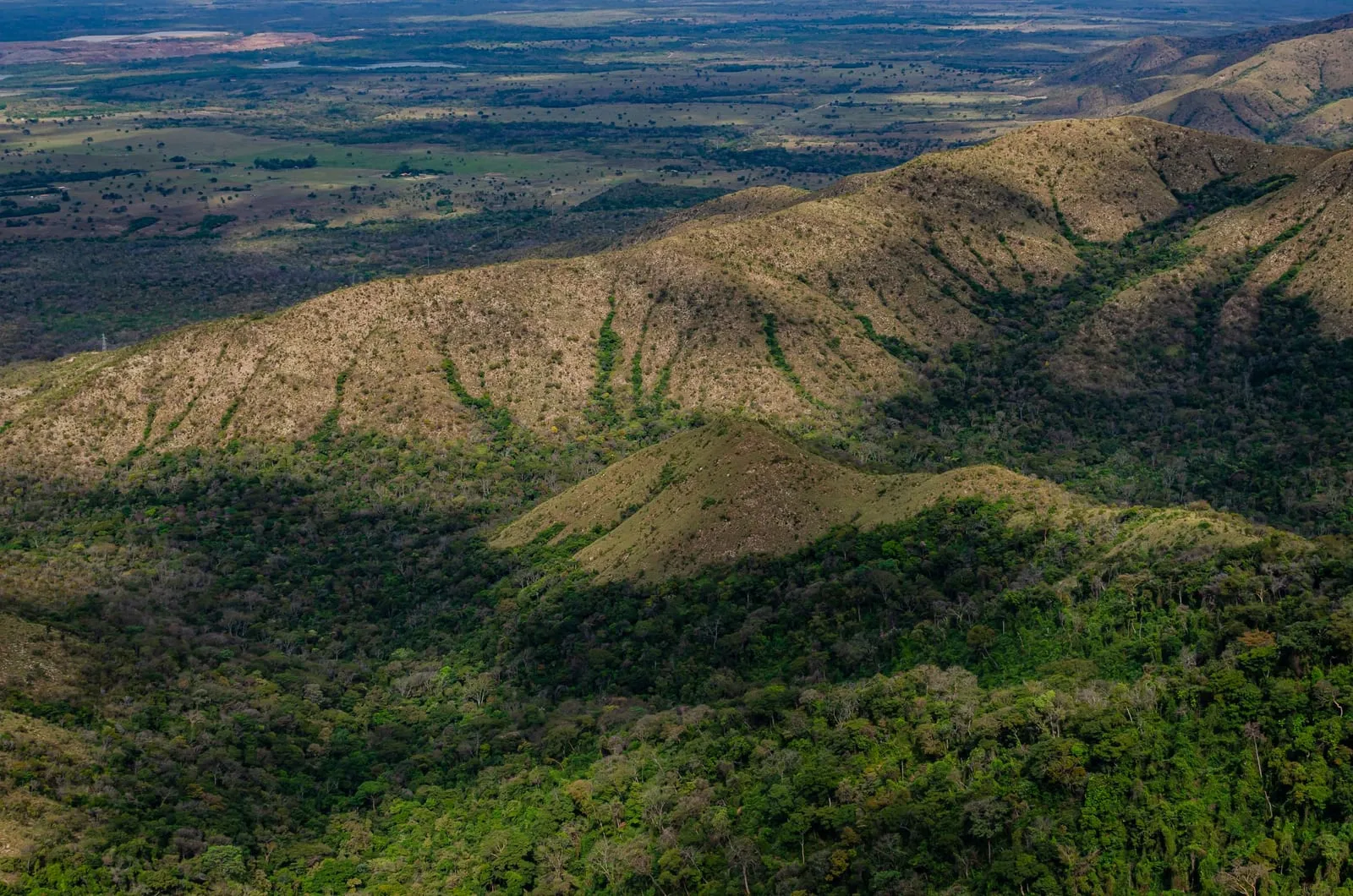
Red cliffs, tall waterfalls, caves and sunsets over the plains, close to Cuiabá and the Pantanal, plus the Portuguese you'll need there.
Chapada dos Guimarães is a high sandstone plateau just outside Cuiabá, the capital of Mato Grosso. Its red cliffs, waterfalls and caves stand above the plains, with views that seem endless. It’s cooler than Cuiabá, one of the hottest cities in Brazil, and the perfect complement to a wildlife trip to the Pantanal.
The town has a laid-back, slightly alternative feel, with artists and nature lovers. People from Mato Grosso have their own accent and vocabulary, and the old Cuiabá way of speaking (“cuiabanês”) is famous across Brazil.
Updated November 2026 · by Ed
The Portuguese you'll actually use here. Tap to hear how it sounds, then say it out loud.
Start every question with "Com licença…" (excuse me) and end with "obrigado" (if you're a man) or "obrigada" (if you're a woman).
Precisa de guia para o Circuito das Cachoeiras?
Do you need a guide for the waterfall circuit?
Several trails in the national park can only be done with an accredited guide.
Onde fica o mirante do Véu de Noiva?
Where is the Véu de Noiva viewpoint?
Que calor! Tem água gelada?
It's so hot! Do you have cold water?
O parque abre que horas?
What time does the park open?
Onde a gente vê o pôr do sol?
Where do we watch the sunset?
Me vê uma Maria Isabel.
Can I have a Maria Isabel?
A caverna é escura?
Is the cave dark?
Audio made with Ed's AI voice. Want to hear the real Ed? Book a lesson
Two or three days for the waterfalls, the cave and the viewpoints. Then continue to the Pantanal.
The attractions are spread out, some on dirt roads. A car (or a tour with transport) is almost essential.
A few Airbnbs and many pousadas in town and in the countryside.
With a useful phrase for each one.

The symbol of Chapada, an 86-meter waterfall falling from red sandstone cliffs into the forest. See it from the viewpoint near the park entrance.
"Que cachoeira alta!"
What a tall waterfall!

A trail inside the national park with seven waterfalls and pools where you can swim, a great way to cool down in the heat.
"Posso nadar nesse poço?"
Can I swim in this pool?

Huge rock formations shaped by wind and water, on the edge of cliffs 350 meters high, with a view of the canyon of the Rio Claro.
"Essas pedras têm formato de quê?"
What shapes do these rocks look like?

One of the largest sandstone caves in Brazil, reached by a trail through the cerrado. Nearby, the Lagoa Azul glows bright blue when sunlight hits it.
"A lagoa fica azul a que horas?"
What time does the lagoon turn blue?

The Mirante do Centro Geodésico overlooks the plains all the way to Cuiabá. Sunsets here are a local ritual.
"Que pôr do sol maravilhoso!"
What a wonderful sunset!
The local dishes worth trying, and how to order them.
Rice cooked with dried beef ("carne seca"), the most typical dish of Mato Grosso, often with fried banana.
"Por que se chama Maria Isabel?"Why is it called Maria Isabel?

A round river fish from the Pantanal, grilled or fried, often served as "costela de pacu" (pacu ribs).
"A costela de pacu tem muita espinha?"Does the pacu rib have lots of bones?

A traditional sweet made from green papaya, brown sugar and ginger, from the old Cuiabá cooking.
"Do que é feito esse doce?"What is this sweet made of?

Tip: in Brazil a pousada is a small guesthouse, often family-run, with breakfast included.
Stay connected from the moment you land: Get a Brazil eSIM (data plan you install before the trip). How it works
Affiliate links: Ed may earn a small commission at no extra cost to you.
1 h by road from Cuiabá. Chapada is about 65 km from Cuiabá airport (CGB). Rent a car or take a bus. Easy to combine with a Pantanal trip.
May–Sep. Dry season, with clear skies and easier trails. The rainy season (Nov–Mar) has fuller waterfalls but some trails may close.
Around R$ 350–700 / day. Rough mid-range estimate per person (pousada, meals, guide and park fees).
2–4 days. Two or three days for the waterfalls, the cave and the viewpoints. Then continue to the Pantanal.
Recommended. The attractions are spread out, some on dirt roads. A car (or a tour with transport) is almost essential.
Chapada town: A small, charming town with restaurants around the main square. Countryside pousadas: Quiet places surrounded by cerrado, some with their own waterfalls. Cuiabá: If you only have a day trip, but it's much hotter down there.
A few Airbnbs and many pousadas in town and in the countryside.
Some people in hotels and tourist businesses speak English, but most locals speak only Portuguese. Learning a few phrases, like the ones in this guide, makes your trip much easier and Brazilians really appreciate the effort.
Everything on this site is free, and it'll stay that way. If you'd like extra help, here's what Ed offers:

The world's largest tropical wetland, where jaguars, caimans and giant storks are easier to see than almost anywhere on Earth, plus the Portuguese you'll need there.

Floating down crystal-clear rivers with colorful fish, blue caves, and the world's largest wetland full of wildlife, plus the Portuguese you'll need there.

Canyons, crystal waterfalls and the strange rocks of the Vale da Lua in the high savanna near Brasília, plus the Portuguese you'll need there.
20 essential phrases and a simple 7-day plan to start speaking real Brazilian Portuguese.