Pintado à urucum
Pintado, a big river catfish, baked with annatto, cheese and coconut milk. A Mato Grosso classic.
"Esse peixe é daqui do rio?"Is this fish from the river here?
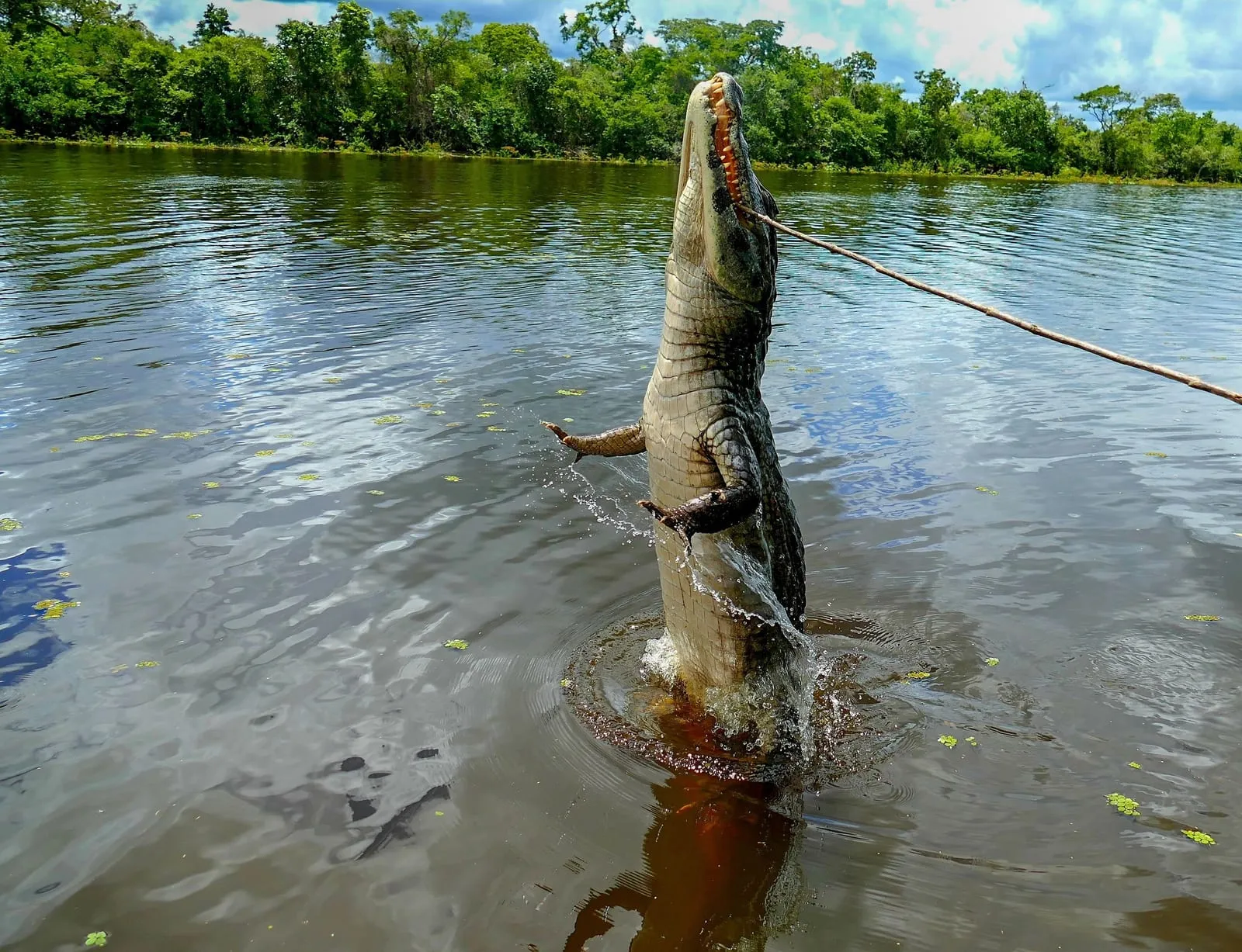
The world's largest tropical wetland, where jaguars, caimans and giant storks are easier to see than almost anywhere on Earth, plus the Portuguese you'll need there.
The Pantanal is a seasonal wetland bigger than many countries, shared by Brazil, Bolivia and Paraguay. In the rainy season the rivers overflow and cover the plains. In the dry season the water goes back, and animals concentrate around the lagoons. That makes it one of the best places on the planet to see wildlife, much easier than the Amazon, where the forest hides everything.
Life here is slow and rural. Guides, boat drivers and pantaneiros often speak only Portuguese, so a few phrases make the trip much richer, especially around the table at dinner, when everyone shares the day’s sightings.
Updated November 2026 · by Ed
The Portuguese you'll actually use here. Tap to hear how it sounds, then say it out loud.
Start every question with "Com licença…" (excuse me) and end with "obrigado" (if you're a man) or "obrigada" (if you're a woman).
Tem onça por aqui?
Are there jaguars around here?
"Onça" is what everyone calls the jaguar (the full name is "onça-pintada").
Olha o tuiuiú!
Look at the jabiru stork!
The tuiuiú, a huge black-and-white stork with a red neck, is the symbol of the Pantanal.
A que horas sai o passeio de barco?
What time does the boat tour leave?
Precisa de repelente?
Do I need insect repellent?
Dá para pescar piranha?
Can we fish for piranhas?
Fala mais devagar, por favor.
Speak more slowly, please.
O guia fala inglês?
Does the guide speak English?
Audio made with Ed's AI voice. Want to hear the real Ed? Book a lesson
Three nights is the minimum. Add two more for Porto Jofre and the jaguars.
Lodges usually include transfers from Cuiabá or Campo Grande. If you drive the Transpantaneira yourself, a high car is safer.
Very few Airbnbs. You stay at "pousadas" and "fazendas" (lodges and ranches), most with full board and guides.
With a useful phrase for each one.

At the end of the Transpantaneira, boats explore the rivers where jaguars rest and hunt on the banks. Between July and October, sightings are very likely.
"Onde vocês viram a onça hoje?"
Where did you see the jaguar today?

A 147 km dirt road from Poconé to Porto Jofre with more than 100 wooden bridges. Caimans, capybaras and birds everywhere. Go slowly and stop often.
"Essa ponte é segura?"
Is this bridge safe?

The local cowboys, the "pantaneiros", have worked cattle here for centuries. Many lodges offer horse rides through flooded fields.
"Eu nunca andei a cavalo."
I've never ridden a horse.

With a simple bamboo rod and a piece of meat, you can catch piranhas in minutes. The lodge cook will often fry them for dinner.
"Pode fritar o peixe para a gente?"
Can you fry the fish for us?

After dark, guides use spotlights to find caimans' glowing eyes, owls, foxes and, with luck, an ocelot or a tapir.
"Que bicho é esse?"
What animal is that?
The local dishes worth trying, and how to order them.
Pintado, a big river catfish, baked with annatto, cheese and coconut milk. A Mato Grosso classic.
"Esse peixe é daqui do rio?"Is this fish from the river here?

A thick piranha soup. Locals say it gives you energy (and some say it's an aphrodisiac).
"Tem espinha?"Does it have bones?

Rice cooked with dried beef, the traditional meal of cattle drivers.
"Posso repetir?"Can I have seconds?

Tip: in Brazil a pousada is a small guesthouse, often family-run, with breakfast included.
Stay connected from the moment you land: Get a Brazil eSIM (data plan you install before the trip). How it works
Affiliate links: Ed may earn a small commission at no extra cost to you.
Fly to Cuiabá or Campo Grande. Cuiabá (CGB) is the gateway to the northern Pantanal and the Transpantaneira. Campo Grande (CGR) serves the southern Pantanal, near Bonito.
Jul–Oct. The dry season. Animals gather around the remaining water, so wildlife viewing is at its best. From December to March much of the land floods.
Around R$ 1,000–2,500 / day. Rough estimate per person. Most lodges are all-inclusive (room, meals and guided tours).
3–5 days. Three nights is the minimum. Add two more for Porto Jofre and the jaguars.
Optional. Lodges usually include transfers from Cuiabá or Campo Grande. If you drive the Transpantaneira yourself, a high car is safer.
Transpantaneira (north): Lodges along the road from Poconé. Best area for jaguars and easy to reach from Cuiabá. Miranda and Estrada Parque (south): Big cattle ranches, great birdwatching. Easy to combine with Bonito. Porto Jofre: At the end of the road, right on the jaguar rivers.
Very few Airbnbs. You stay at "pousadas" and "fazendas" (lodges and ranches), most with full board and guides.
Some people in hotels and tourist businesses speak English, but most locals speak only Portuguese. Learning a few phrases, like the ones in this guide, makes your trip much easier and Brazilians really appreciate the effort.
Everything on this site is free, and it'll stay that way. If you'd like extra help, here's what Ed offers:

Red cliffs, tall waterfalls, caves and sunsets over the plains, close to Cuiabá and the Pantanal, plus the Portuguese you'll need there.

Floating down crystal-clear rivers with colorful fish, blue caves, and the world's largest wetland full of wildlife, plus the Portuguese you'll need there.

Canyons, crystal waterfalls and the strange rocks of the Vale da Lua in the high savanna near Brasília, plus the Portuguese you'll need there.
20 essential phrases and a simple 7-day plan to start speaking real Brazilian Portuguese.