Filé marajoara
Buffalo steak topped with melted buffalo cheese. The island's signature dish.
"O filé vem com o quê?"What does the steak come with?
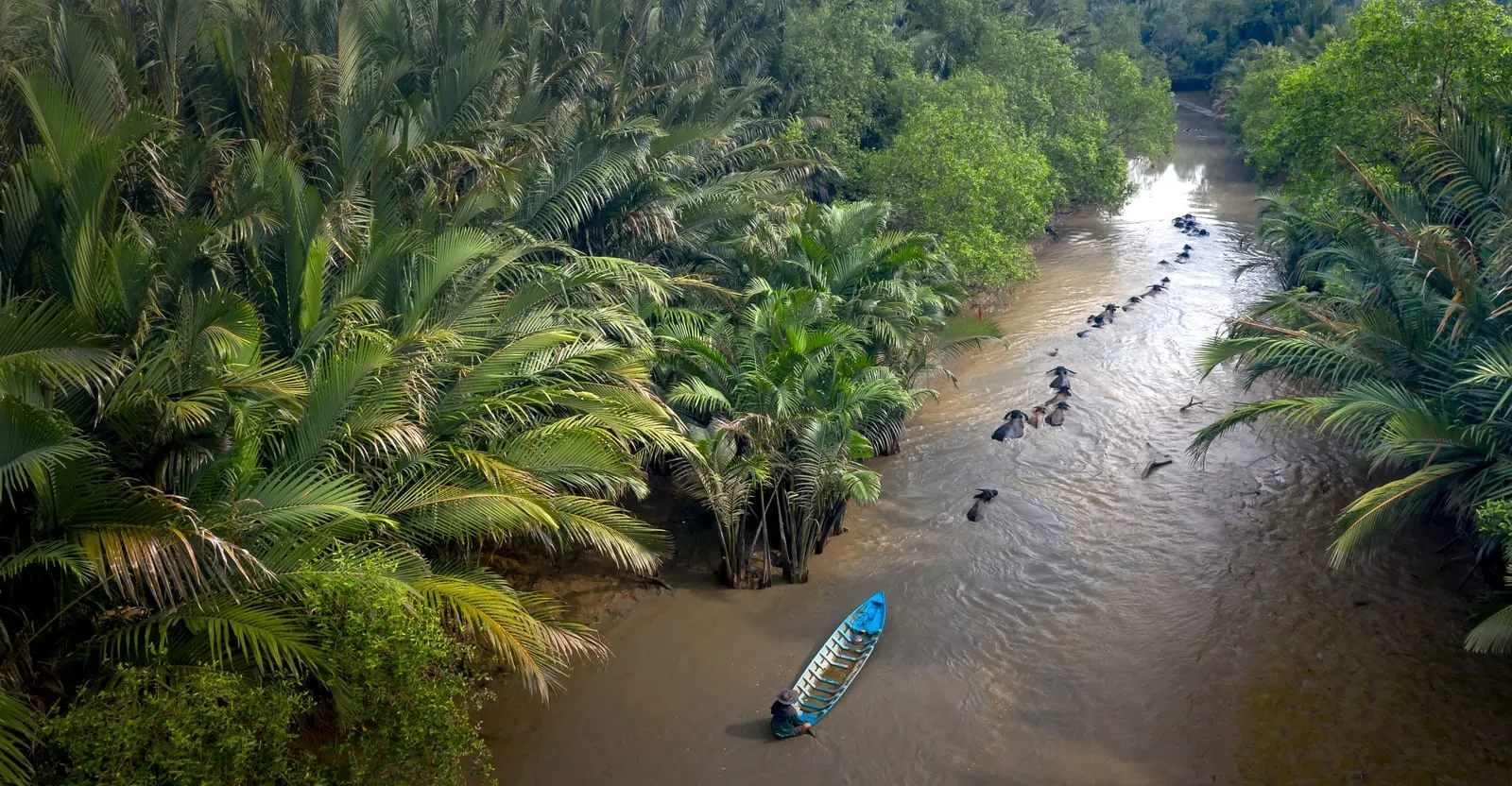
The world's largest river-sea island, with water buffalo in the streets, wild beaches and ancient pottery, plus the Portuguese you'll need there.
Marajó, at the mouth of the Amazon, is the largest island in the world surrounded by both river and sea water, about the size of Switzerland. Its fields flood half the year, and life follows the rhythm of the water. Thousands of water buffalo, which legend says arrived after a shipwreck, now live here, and they’re everywhere: on farms, pulling carts and even carrying police officers.
It’s a slow, simple and very authentic destination, with almost no international tourism. People speak the Portuguese of Pará, with a characteristic “tu” and the famous “égua” for surprise. You’ll need Portuguese for almost everything here.
Updated November 2026 · by Ed
The Portuguese you'll actually use here. Tap to hear how it sounds, then say it out loud.
Start every question with "Com licença…" (excuse me) and end with "obrigado" (if you're a man) or "obrigada" (if you're a woman).
Que horas sai o barco para o Marajó?
What time does the boat to Marajó leave?
Posso andar de búfalo?
Can I ride a buffalo?
Buffalo rides are a classic on the farms. In Soure, even the police patrol on buffalo!
Me vê um filé marajoara.
Can I have a Marajó-style steak?
Esse queijo é de búfala?
Is this cheese from buffalo milk?
A praia é de rio ou de mar?
Is the beach river or sea?
Quanto custa a bicicleta por dia?
How much is the bike per day?
Essa cerâmica é feita aqui?
Is this pottery made here?
Audio made with Ed's AI voice. Want to hear the real Ed? Book a lesson
Three or four days for a farm, the beaches and the towns. Combine with a few days in Belém.
Bikes, mototaxis and tours cover most of what you need. Some visitors bring a car on the ferry.
Very few Airbnbs. Stay in simple pousadas or farm hotels.
With a useful phrase for each one.

The island has more water buffalo than people. Farms near Soure offer rides, canoe trips through the mangroves and a taste of buffalo milk and cheese.
"Quantos búfalos tem na fazenda?"
How many buffalo are there on the farm?

A huge beach near Soure, where the river meets the ocean. The water is a little salty and the sand goes on for kilometers.
"Tem barraca para almoçar?"
Is there a beach shack for lunch?

A quiet village in Salvaterra with the stone ruins of a 17th-century Jesuit church right on the beach.
"Essas ruínas são de quando?"
When are these ruins from?

The ancient Marajoara people made beautiful decorated ceramics more than 1,000 years ago. Local artisans still make pieces in the traditional style.
"Posso ver como faz?"
Can I see how it's made?

The town is flat and quiet, with mango trees, buffalo carts and simple houses. Renting a bike is the best way to explore.
"Qual é o caminho para a praia?"
Which way to the beach?
The local dishes worth trying, and how to order them.
Buffalo steak topped with melted buffalo cheese. The island's signature dish.
"O filé vem com o quê?"What does the steak come with?

A soft, creamy cheese made from buffalo milk, one of the oldest traditional cheeses in Brazil.
"Posso levar um queijo para Belém?"Can I take a cheese to Belém?

Crab from the mangroves, cooked in a seasoned broth and eaten with your hands.
"Pode me ensinar a quebrar o caranguejo?"Can you teach me to crack the crab?

Tip: in Brazil a pousada is a small guesthouse, often family-run, with breakfast included.
Stay connected from the moment you land: Get a Brazil eSIM (data plan you install before the trip). How it works
Affiliate links: Ed may earn a small commission at no extra cost to you.
Ferry from Belém, 3–4 h. Boats and ferries leave from Belém (BEL) to the port of Camará, then a short drive to Salvaterra or Soure. Fast boats are quicker but depend on the weather.
Jul–Dec. Dry season, with sunny beaches and easier roads. From January to June it rains a lot and the fields flood, which is beautiful but harder to explore.
Around R$ 300–600 / day. Rough mid-range estimate per person (pousada, meals, ferry and one farm tour). Bring cash.
3–4 days. Three or four days for a farm, the beaches and the towns. Combine with a few days in Belém.
Not needed. Bikes, mototaxis and tours cover most of what you need. Some visitors bring a car on the ferry.
Soure: The main town, with more pousadas, restaurants and access to the best beaches and farms. Salvaterra: Across the river from Soure, quieter, with beaches and the Joanes ruins. Buffalo farms: Stay on a working farm for the full Marajó experience.
Very few Airbnbs. Stay in simple pousadas or farm hotels.
Some people in hotels and tourist businesses speak English, but most locals speak only Portuguese. Learning a few phrases, like the ones in this guide, makes your trip much easier and Brazilians really appreciate the effort.
Everything on this site is free, and it'll stay that way. If you'd like extra help, here's what Ed offers:

The Amazon's food capital, real açaí and the white river beaches of Alter do Chão, plus the Portuguese you'll need there.

White-sand beaches on a giant Amazon river, river dolphins and the rainforest at your door, plus the Portuguese you'll need there.

The gateway to the Amazon rainforest, with jungle lodges, river dolphins and the Meeting of the Waters, plus the Portuguese you'll need on the river.

20 essential phrases and a simple 7-day plan to start speaking real Brazilian Portuguese.