Doces de Pelotas
Small sweets made with egg yolks, sugar, almonds, coconut and fruits, wrapped in colorful paper. Buy a box to share.
"Esses doces duram quantos dias?"How many days do these sweets last?
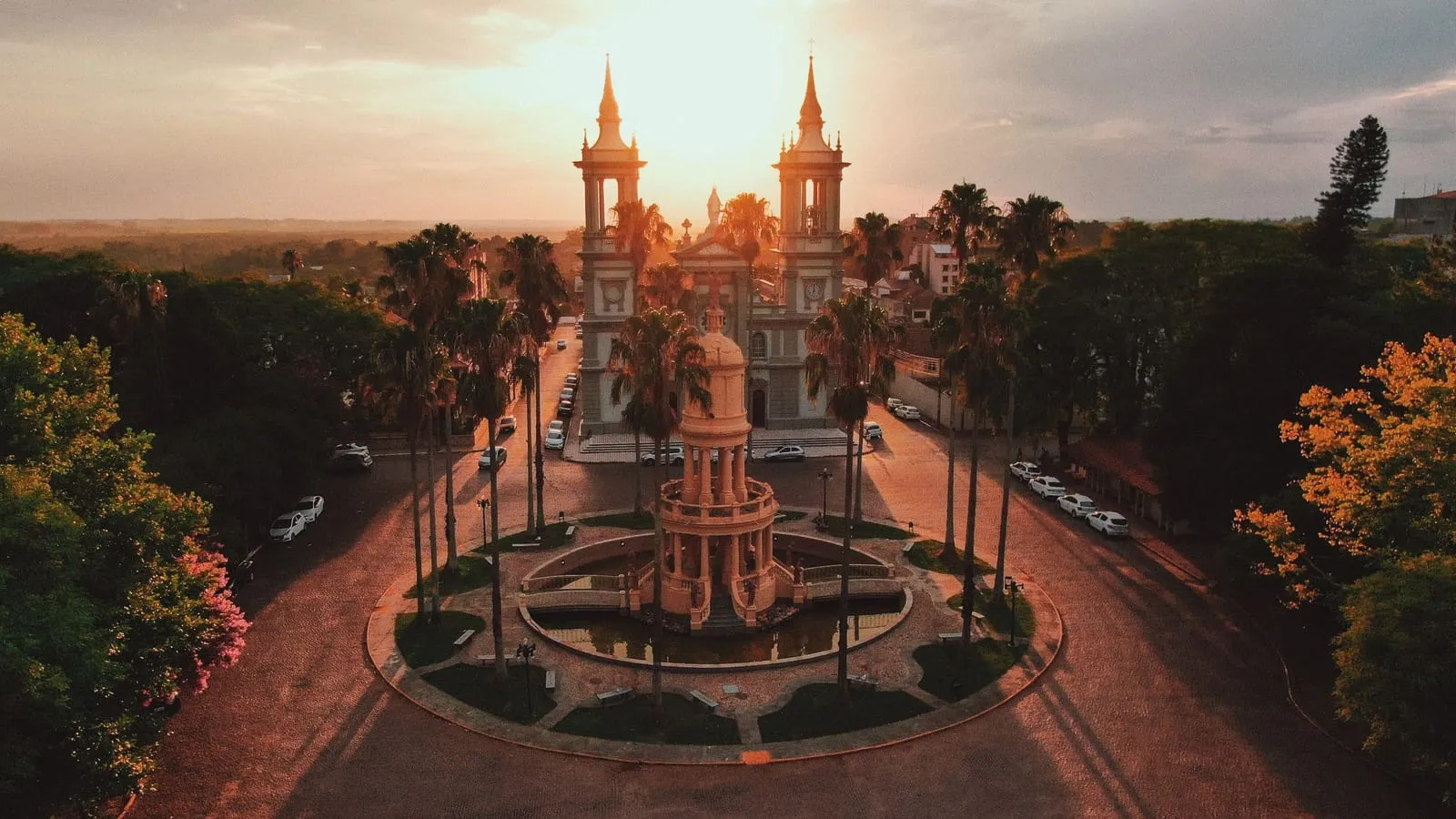
Brazil's capital of sweets, with Portuguese-style candies, grand 19th-century mansions and a lake beach in the pampas, plus the Portuguese you'll need there.
Pelotas, in the far south of Brazil, grew rich in the 19th century producing charque, dried salted beef, on farms worked by enslaved Africans. The wealth built elegant mansions, theaters and squares, and families of Portuguese origin brought the convent sweet recipes that made the city famous.
Today Pelotas is a university town known across Brazil as the national capital of sweets. It’s a great place to explore gaúcho culture, the hard history of the pampas and some of the best desserts in the country.
Updated November 2026 · by Ed
The Portuguese you'll actually use here. Tap to hear how it sounds, then say it out loud.
Start every question with "Com licença…" (excuse me) and end with "obrigado" (if you're a man) or "obrigada" (if you're a woman).
Qual é o doce mais tradicional de Pelotas?
What's the most traditional sweet of Pelotas?
Me vê uma caixinha com doces sortidos.
Give me a little box of assorted sweets.
Esse doce leva ovo?
Does this sweet have egg in it?
Many Pelotas sweets come from old Portuguese convent recipes made with lots of egg yolks and sugar.
A Fenadoce é em que mês?
Which month is Fenadoce?
Os casarões abrem para visita?
Are the mansions open to visitors?
O que era uma charqueada?
What was a charqueada?
Bah, tchê, que doce bom!
Wow, man, what a great sweet!
Audio made with Ed's AI voice. Want to hear the real Ed? Book a lesson
Two days for the sweets, the mansions, a charqueada and the sunset at Laranjal.
The center is walkable and apps reach Laranjal and the charqueadas.
Plenty of apartments on Airbnb, plus hotels in the center.
With a useful phrase for each one.

The traditional sweets of Pelotas, inherited from Portuguese convent recipes, are recognized as Brazilian cultural heritage. Try ninho, camafeu, bem-casado, olho de sogra and pastel de Santa Clara in the traditional sweet shops.
"Qual é a diferença entre o ninho e o camafeu?"
What's the difference between the ninho and the camafeu?

The main square, with a French fountain and grand 19th-century mansions around it, built with the money of the dried-beef industry. Some houses are now museums.
"Quem morava nesse casarão?"
Who lived in this mansion?

A restored 19th-century public market with cafés, shops and a clock tower, a lively meeting point in the center.
"Onde tem um bom café aqui no mercado?"
Where's a good café here in the market?

Old farms along the São Gonçalo river where dried beef (charque) was produced with enslaved labor in the 19th century. Some offer visits that explain this difficult history.
"A visita fala sobre a escravidão?"
Does the visit talk about slavery?

A beach on the Lagoa dos Patos, one of the largest lagoons in South America, with calm, brown fresh water and beautiful sunsets.
"A água da lagoa é doce?"
Is the lagoon water fresh?
The local dishes worth trying, and how to order them.
Small sweets made with egg yolks, sugar, almonds, coconut and fruits, wrapped in colorful paper. Buy a box to share.
"Esses doces duram quantos dias?"How many days do these sweets last?

Rice cooked with dried salted beef, the heritage of the charqueadas.
"O charque é muito salgado?"Is the dried beef very salty?

The bitter mate tea of the gaúchos, shared everywhere, from offices to parks.
"Vocês tomam chimarrão todo dia?"Do you drink chimarrão every day?

Tip: in Brazil a pousada is a small guesthouse, often family-run, with breakfast included.
Stay connected from the moment you land: Get a Brazil eSIM (data plan you install before the trip). How it works
Affiliate links: Ed may earn a small commission at no extra cost to you.
3.5 h by road from Porto Alegre. Pelotas is about 260 km south of Porto Alegre (POA). Its own airport (PET) has a few flights. Buses run often from Porto Alegre.
Mar–May / Sep–Nov. Mild weather for walking. The Fenadoce sweets festival usually happens around June. Summer is hot and humid, winter is cold and windy.
Around R$ 200–450 / day. Rough mid-range estimate per person (hotel, meals and lots of sweets).
2 days. Two days for the sweets, the mansions, a charqueada and the sunset at Laranjal.
Optional. The center is walkable and apps reach Laranjal and the charqueadas.
Center: Near the square, the market and the sweet shops. Laranjal: By the lagoon, quieter, with sunset views. Near the university: Lively student areas with bars.
Plenty of apartments on Airbnb, plus hotels in the center.
Some people in hotels and tourist businesses speak English, but most locals speak only Portuguese. Learning a few phrases, like the ones in this guide, makes your trip much easier and Brazilians really appreciate the effort.
Everything on this site is free, and it'll stay that way. If you'd like extra help, here's what Ed offers:

Gaúcho culture, churrasco, chimarrão and sunsets over the Guaíba, plus the Portuguese you'll need there.

Basalt cliffs falling into the sea, sea lions on a rocky island and a hot air balloon festival, on the most beautiful beach of Rio Grande do Sul, plus the Portuguese you'll need there.

The red stone ruins of a Jesuit-Guarani mission, a UNESCO World Heritage Site with a sound and light show under the stars, plus the Portuguese you'll need there.

20 essential phrases and a simple 7-day plan to start speaking real Brazilian Portuguese.